THE new Pakistan Investment Policy 2023 appears to have been driven by the government’s short- to medium-term objective of facilitating ‘promised’ investment from the Gulf countries, and the longer-term goal of improving the overall business environment at home to enhance investment-to-GDP ratio to 20pc.
The World Bank estimates that investment will plunge to 13.3pc as a ratio of GDP during the present financial year from 15pc in FY20. Designed in collaboration with multilateral financial institutions, the policy is expected to attract $20-25bn in investment over the next few years.
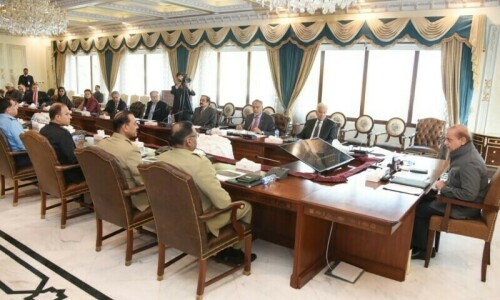
The government has indicated that the GCC nations are very interested in investing in different segments of Pakistan’s economy to support development. The prime minister has already formed a Special Investment Facilitation Council to overcome any obstacles in the way of the project.
The policy will focus on reducing the cost and facilitating the ease of doing business, streamlining business processes and promoting the convergence of trade, industrial and monetary policies. It offers numerous incentives to foreign investors, including elimination of the minimum equity requirement and permission to invest in all sectors, barring a few.
The investors will be able to remit their entire profits back home in their own currencies and receive special protection. They will be also allowed to lease land without restriction, and transfer any land they hold without limitation. The policy lifts restrictions on foreign real estate developers.
Foreign investors will be permitted to hold a 60pc stake in agricultural projects and 100pc equity in corporate farming.
Recent trends show that FDI flows are directed mostly towards politically and economically stable economies that have strong foundations for future growth and can access broader markets.
Other factors that influence foreign investors’ decisions include tax rates, regulatory transparency, policy consistency, technological infrastructure and a secure environment. Sadly, we lag far behind even regional countries on these counts. No wonder foreign firms are exiting our market.
Even Chinese firms looking for relocation of their manufacturing facilities for export back home and elsewhere in the world are reluctant to invest here. Pakistan stands at a critical juncture in its history: it can turn its economic crisis into an opportunity by quickly implementing governance and structural reforms to attract investment or suffer on account of inaction.
The new policy will likely woo official investment from friendly foreign governments. But private foreign investment flows will not materialise unless we fix all our systems that can affect an investor in any way.
Published in Dawn, July 11th, 2023