Sudan warring parties trade blame as fighting rages


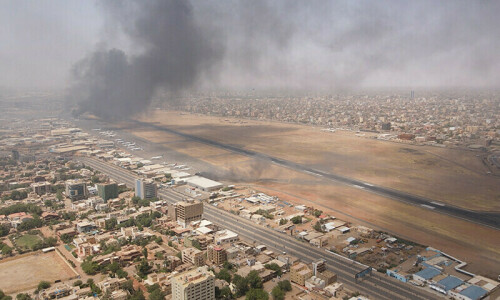
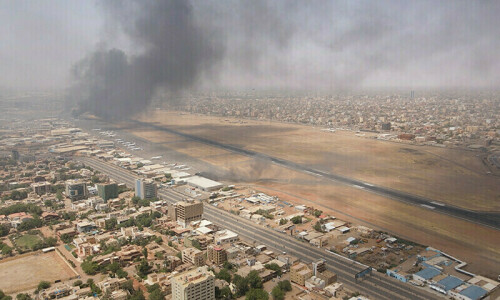
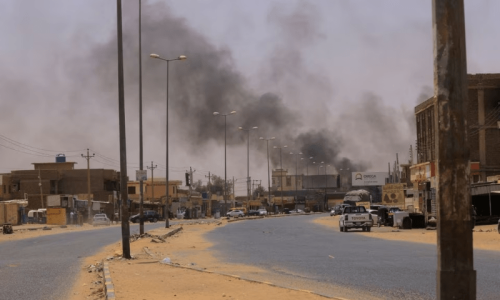
KHARTOUM: Explosions rocked Khartoum on Thursday, more than two months after fighting broke out between rival Sudanese generals, with each side accusing the other of attacks on civilians.
Witnesses in the east of the capital reported artillery fire, while others in the northern suburbs said there was heavy shelling from an army barracks, with the force of the blasts shaking the walls of houses.
Witnesses also said clashes erupted on the streets as “military aircraft flew overhead” in an area of central Khartoum that “had been calm for 10 days”.
Fighting since April 15 between the regular army, led by Abdel Fattah al-Burhan, and the paramilitary Rapid Support Forces (RSF) headed by his former deputy Mohamed Hamdan Daglo has claimed more than 2,000 lives.
The latest in a series of ceasefires that have all been systematically violated ended on Wednesday morning, and fighting resumed within minutes.
The three-day US- and Saudi-brokered ceasefire had brought a brief respite to the millions of civilians trapped by fighting and suffering shortages of medical care, electricity, water and other essentials.
The army accused the RSF of “taking advantage of the truce to mobilise its forces and commit several violations against civilians”. The RSF in turn accused the army of fabricating a video of a rape attack, alleging “one of the actors appeared in the uniform” of the armed forces, “proving their guilt”.
Fighting has largely been concentrated in the capital and the western Darfur region, but on Wednesday, the army accused a key rebel group in South Kordofan state, hundreds of kilometres (miles) southwest of Khartoum, of having “attacked” its troops.
The deadliest fighting has raged in Darfur, a vast region on Sudan’s western border with Chad.
In Nyala, the capital of South Darfur state, the army and paramilitary fighters clashed using “all types of weapons”, residents said on Wednesday evening.
In Darfur, home to ethnic minority groups as well as Arab tribes, the conflict has “taken an ethnic dimension”, the United Nations has warned. The chief of the UN’s World Health Organisation, Tedros Adhanom Ghebreyesus, on Wednesday confirmed “46 attacks on health care since the start of the fighting”.
He said about two-thirds of health facilities in areas affected by the war are “out of service,” and warned that “the risk of epidemics will only increase” with the rainy season that began this month.
The WHO said around 11 million people needed health assistance and voiced concerns about attempts to control ongoing epidemics of measles, malaria and dengue.
Published in Dawn, June 23rd, 2023