0
0

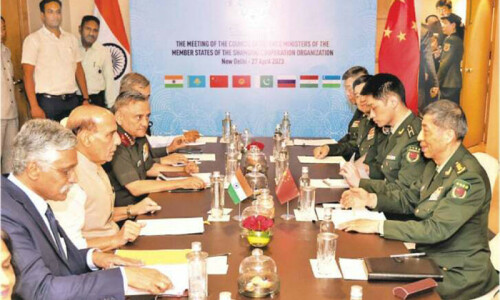
India and China must find a way to step back from potential confrontation in the western Himalayas, India’s foreign minister said on Thursday, fearing that the militarised, disputed border could lead to conflict between the nuclear-armed neighbours.
Both militaries have fortified positions and deployed large numbers of troops and equipment in the last three years, after a clash in which 20 Indian soldiers and four Chinese soldiers were killed in hand-to-hand fighting, without a shot being fired.
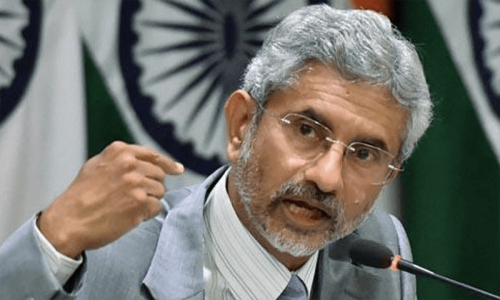
“The two of us have to find a way of disengaging because I don’t believe this present impasse serves China’s interest either,” Foreign Minister Subrahmanyam Jaishankar told reporters in New Delhi.
“The fact is the relationship is impacted, and the relationship will continue to be impacted. If there is any expectation that somehow we will normalise while the border situation is not normal, that’s not a well-founded expectation,” he said.
Several rounds of military and diplomatic talks have helped ease tensions between the two opposing armies, but Jaishankar had in March described the situation there as fragile and dangerous.
Jaishankar said the two governments remained in touch, and there were several military and diplomatic mechanisms in place for both sides to communicate.
“These mechanisms continue to do the work because, at the end of the day, disengagement is a very detailed process… all of this would continue to happen,” he said.
According to Jaishankar, New Delhi had told Beijing even before the May 2020 border clash that “we are seeing the movement of your forces which, in our view, is violative of our understanding”.
India and China share a 3,800km (2,360-mile) frontier, much of it poorly demarcated, and fought a brief but bloody war over it in 1962.
Ties recovered following a series of border agreements since the 1990s and China is now India’s second-largest trading partner.
India, however, is a member of the so-called Quad strategic security group, along with Australia, Japan and the United States. The Quad was created in 2007 to counter-balance China’s growing economic and military power in the Asia-Pacific region.
Beijing has criticised the Quad as an exclusive, US-led block aimed at containing China’s rise.