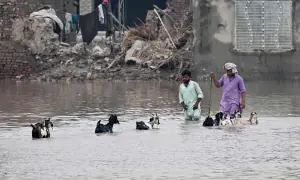
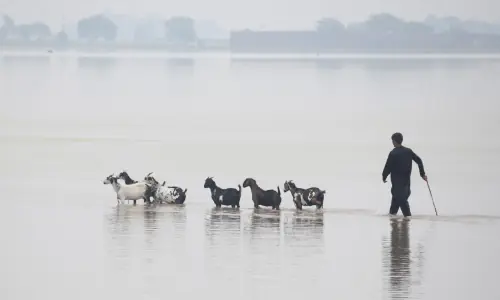
A RECENTLY released report by two UN agencies should serve as a wake-up call to the ruling elite — that is, if they can spare some time from their Machiavellian bickering to think about the welfare of millions of ordinary Pakistanis. According to the Hunger Hotspots: FAO-WFP Early Warnings on Acute Food Insecurity report, Pakistan has been designated a country of ‘very high concern’ where food insecurity is concerned. It is grouped with states such as Ethiopia, Kenya and Syria. The study lists the three main factors fuelling food insecurity as the economic and political crises, along with the aftermath of last year’s massive floods. It notes that Pakistan has to pay around $77.5bn in external debt over the next few years, even though its coffers are nearly empty, and there is no sign of a quick economic recovery. It predicts that the “political crisis and civil unrest are likely to worsen” as elections draw close. Indeed, high inflation has hammered the budgets of the working and lower-middle classes, while even financially more secure segments of society have had to tighten their belts significantly.
Even before its political and economic woes morphed into a debilitating polycrisis, the country was battling food insecurity. As per WFP figures, millions of people are undernourished, while nearly half of under-five children are stunted. Wasting in youngsters is also a major public health challenge. A State Bank study says that amongst the main factors impacting food security is poor access, which means the poorest cannot afford to buy food, as well as import-dependence of certain food items. When the economy is heading south and the rupee is nosediving, buying expensive commodities from the global market becomes a herculean task. There are no quick or easy answers to how food insecurity can be tackled; the fact is that the crisis has been decades in the making. The elite — uniformed and civilian — are not familiar with hunger, which is why they are least concerned if millions of people in this country cannot afford to eat. Numerous solutions have been mooted: strengthening social safety nets; population control; improving agricultural yields; aiming for food autarky; etc. Ultimately, the rulers can ignore the food security crisis at their own peril, and be ready to explain to the hungry and the desperate why they cannot provide bread for their children.
Published in Dawn, May 31st, 2023