THE Afghan Taliban may be unpleasant interlocutors, considering their violent past and unimpressive attitude towards inclusivity and democratic governance.
Yet, one thing that many in the international community — particularly Afghanistan’s neighbours — realise is that there are few options but to engage with the group as it is, after all, the de facto government in Kabul.
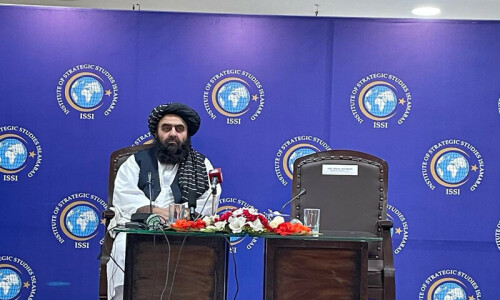
Pakistan and China very much adhere to this thinking, as was evidenced by the recently concluded Fifth Trilateral Foreign Ministers Dialogue in Islamabad, in which the top diplomats of Pakistan, China and Afghanistan participated.
As expected, counterterrorism and economics topped the agenda, with Pakistan and China gently reminding the Afghan side that more work had to be done to ensure Afghanistan did not become a haven for terrorist groups. Moreover, the proposal to extend CPEC to Afghanistan would also be significant for regional geo-economics, should it come to fruition.
The dialogue also brought to the fore China’s growing desire to be seen as a regional and global peacemaker, as Beijing seeks to deploy its brand of diplomacy in trouble spots across the world.
All three foreign ministers pledged to enhance counterterrorism cooperation. For Pakistan, the presence of militant groups such as the banned TTP in Afghanistan is a major concern, one that has been communicated to Kabul on multiple occasions.
China is also wary of militants using Afghanistan as a safe haven. Just last month, its foreign ministry, pinpointing its concerns about the Uighur militant group, observed that “ETIM forces in Afghanistan pose a severe threat to the security of China” — in fact, to the entire region.
Pakistan, China and other regional states must continue to pressure the Taliban to ensure terrorist groups find no refuge on Afghan soil; and the Taliban must be told again and again that expanded trade links and their engagement with the international community will suffer unless these groups are reined in.
It is of note that the Afghan delegation was reminded by the Chinese Foreign Minister Qin Gang of the need to “embrace inclusive governance and moderate policies”, while Bilawal Bhutto-Zardari said that his message to the Afghan side was “help us help you”.
After decades of instability and war, the people of Afghanistan need an atmosphere free of militancy, where they can rebuild their country and bring prosperity to millions, who currently depend on the kindness of the international community to keep starvation at bay.
The more pragmatic actors within the Afghan Taliban must prevail on their hard-line leadership and convince them that the country can only advance when all Afghans, including the female population, have a say in governance, and when fundamental rights are protected, while the international community must assure Afghans that it will help them get through these difficult times.
Published in Dawn, May 9th, 2023