ISLAMABAD: With the capital’s population rising to over two million people from around 800,000 in 2008, city managers are continuously under stress on how to cater to the basic needs of the residents.
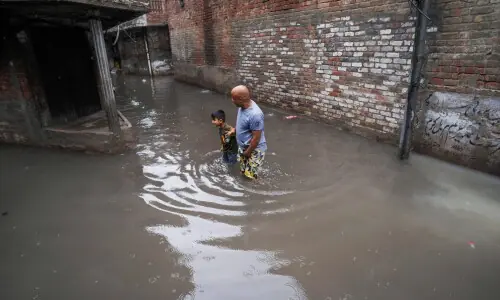
Besides cleanliness, waste disposal, pollution control and maintenance of law and order, provision of sufficient water to households has become a gigantic task as a shortfall in routine supply by the Capital Development Authority (CDA) is forcing residents to purchase water from private operators.
As the population grew to 150pc during the last 15 years, available water resources are falling short of meeting the daily needs of residents, especially during the summer season.
The main sources of water for Islamabad are Simli and Khanpur dams which are dependent on rainfall and melted snow in catchment areas. The CDA had ignored this issue during past decades and since the construction of the Khanpur dam in the 1990s, no new source of water was explored.
Experts believe that if the present situation continues, Pakistan would fall in the list of water-scarce countries within the next few years.
Presently, we are a water-stressed country and shall slip down to the water shortage category in the next few years, if prudent policies are not adopted, said a renowned water expert.
We are cognisant of the situation and have recently recommended changes in existing bylaws proposing the construction of recharge wells for rainwater harvesting to replenish the city’s groundwater resource, said CDA Deputy Director General (Water) Sardar Khan Zimri.
He said the suggested amendments would make it mandatory for all homeowners to construct recharge wells alongside already constructed water tanks. The recharge wells would help to ensure water storage as well as a recharge water table, which would help reduce the depletion rate.
However, seeing the ground realities it is obvious that solely depending on rainwater harvesting or constructing recharge wells is not enough as there is a dire need to change the water usage habits of people, he said.
If those consuming water rampantly are charged at the same rate as those using less water, the wastage cannot be controlled. This discriminatory approach needs to be shunned to facilitate consumers across the board, he added.
According to an official and renowned water expert, when Islamabad was built, the groundwater level was just 50 feet low which has now gone down to 500 to 600 feet.
This water shortage issue, he said gave birth to the rapid growth of tanker mafia who were exploiting needy people by charging whatever amount they want to provide water.
Making many wait for hours for water and providing others ample water for floor cleaning, car washing and gardening is in no way justified, he added.
Published in Dawn, May 8th, 2023