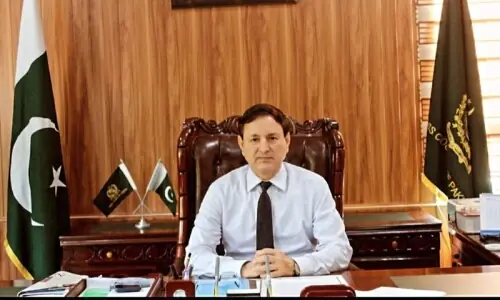
ISLAMABAD: As World Immunisation Week is observed in the last week of April, Health Minister Abdul Qadir Patel urged parents to get their children aged up to two years vaccinated against 12 deadly diseases.
The week aims to promote the use of vaccines to protect people of all ages against infectious diseases. This year’s theme ‘The Big Catch-up’ urges greater engagement around immunisation globally to promote the role of vaccines in bringing people together, and improving the health and well-being of everyone, everywhere.
In his message, to mark the start of World Immunization Week, Mr Patel said that the ultimate goal of World Immunisation Week was to ensure that more children were protected from vaccine-preventable diseases, allowing them to live happier and healthier lives.
“The Week also provides an opportunity to raise awareness of the value of vaccines and the urgent need to find and vaccinate all missed-out children. Government of Pakistan has committed to ensure that safe and effective vaccines are available and delivered nationwide and reach every child. In this regard, I would take this opportunity to acknowledge and highlight the efforts of our frontline health workers and the Expanded Programme of Immunisation (EPI) teams across Pakistan working tirelessly to reach every child, including those living in the most vulnerable and remote communities,” he said.
Official says Pakistan aims to achieve universal immunisation coverage
“I am also grateful to our International donors and development partners for their commitment and support in meeting our goal of providing free of cost vaccines to every child in Pakistan,” the minister added.
Federal Health Secretary Dr Muhammad Fakhre Alam, in his message, said that the ultimate goal of World Immunisation Week was to acheive 100 per cent immunity against these diseases.
“On behalf of the Ministry of Health, I take this opportunity to urge all stakeholders, i.e. religious leaders, academia, doctors, media persons, civil society organisations, parliamentarians, immunisation partners and donor organisations and especially the parents and our frontline health workers to play their role in order to achieve our ultimate goal of universal immunisation coverage i.e. 100pc fully immunised children,” he said.
Federal Director of Immunisation Director General Dr Muhammad Ahmad Kazi said that it was an opportunity to remind families and communities how effective vaccines can be, and to encourage people to take action to ensure that more children, and increasingly people in other age groups are vaccinated against Covid-19 and immunised against deadly diseases.
“We know that a significant number of unimmunised children come from urban slums, hard to reach and security-compromised areas. These children are in dire need of basic services such as primary health care, education, clean drinking water and sanitation. We now have to focus our resources to find novel means to trace these unvaccinated zero-dose children,” he added.
Coordinator National Emergency Operations Center Dr Shahzad Baig said that polio still threatened the futures of too many children.
“Let us protect all children with polio vaccines, especially those who have never been vaccinated. Because until we end polio for good, polio anywhere puts everyone at risk. We’re striving to make sure kids in even the most marginalised areas can access polio vaccines, other essential care, and a healthier future,” he said.
It is worth mentioning that routine childhood immunisation is a set of inoculations, given from birth to the age of 15 months. This vaccination protects children against tuberculosis, polio, diphtheria, pertussis, tetanus, haemophilus influenza type B, hepatitis B, diarrhoea, pneumonia, typhoid, measles and rubella.
“Vaccines bring us closer to community cohesion and compassion. With equal access to lifesaving vaccines, children can attend school, grow into healthy adults, parents can make their livelihood, and communities can thrive into a prosperous healthier society,” said Dr Palitha Mahipala, WHO Representative in Pakistan.
World Immunisation Week is a reminder that timely vaccination is the first line of defence against communicable diseases’ said Abdullah Fadil, Unicef Representative in Pakistan.
Reiterating Unicef’s resolve to vaccinate every child in Pakistan, he said, “Vaccines save millions of lives every year, especially those of children who are more susceptible to due to low immunity. Vaccination is a safe and effective way to help them survive, thrive and reach their full potential in life.”
Published in Dawn, April 25th, 2023