THE constitutional prescription for elections within 90 days of the dissolution of assemblies may be ill-suited to the PDM coalition’s interests, but the government — any government — has no choice but to kneel before the law.
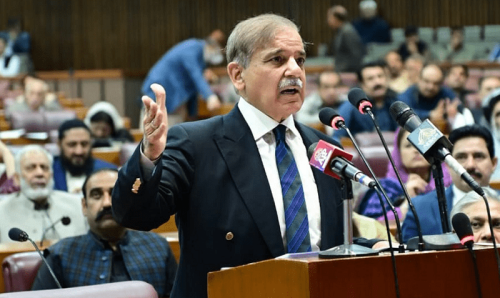
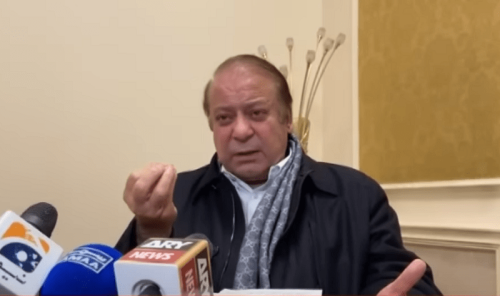
The recent campaign launched by the PML-N-led government and its allied parties to provoke a confrontation both with and within the judiciary — a confrontation they have sought to justify on the basis of what seems to be a gross misunderstanding of the legislature’s role within the state — is unlikely to end well for the country or any of the parties involved.
These parties and their leaders seem to have committed themselves to a very dangerous path under the assumption that their actions will ultimately be endorsed by a segment of the judiciary that they see as ‘sympathetic’ to their political cause.
However, they would do well to keep in mind that the judiciary is, ultimately, an independent institution with a mind of its own.
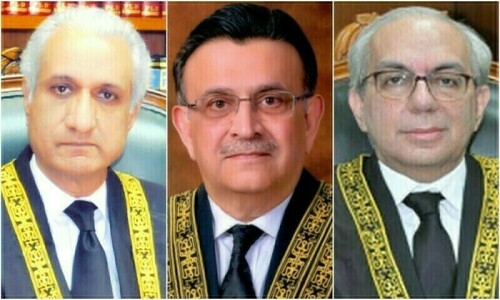
Although it is difficult to comment too deeply on the matter given how secluded the judiciary has traditionally been from the public eye, it can be safely said that the differences between our senior judges are older and rooted in something much bigger than the current political stand-off.
For example, the rightful objections to the non-inclusion of the senior puisne judge in benches hearing important cases is, unfortunately, not a recent development nor one that concerns recent cases only.
Likewise, the debate over curtailing the chief justice’s suo motu powers, as well as his discretionary power over bench formation, has been ongoing for years. Yes, these issues have recently spilt into public view in rather messy ways, but that should not be taken to mean that the judges’ positions on their internal matters are somehow indicative of their ‘political leanings’ as well.
Therefore, the politicians who are taking cover behind the judiciary’s internal turmoil to ‘reject’ the Supreme Court’s judgement in the elections delay case should, perhaps, not throw both sense and restraint out of the window.
It bears pointing out that even within the legal community, there appears to be very little disagreement on the fact that the Constitution clearly specifies that elections do need to be called within 90 days of the dissolution of an assembly.
Therefore, while the manner in which the Supreme Court ruled on the matter may be controversial, there is no escaping its conclusion. Unless the government deliberately wishes to undermine the trichotomy of powers within the state, it should drop its resistance and allow the Election Commission to proceed as directed.
The PDM parties may not fancy their electoral chances given the current environment, but that does not mean they have free rein to pack up the political process and sabotage the state to protect themselves.
Published in Dawn, April 8th, 2023