THE austerity measures announced by the federal government on Wednesday should not have come as an afterthought. Pakistan had already been mired in a mushrooming economic crisis when the PDM government took over.
There had been only two key priorities for the new government after it ousted the PTI from power: keep the economy afloat and the state functioning till the next general election rolled around.
The prime minister, it seems, had different plans. Eager to please the many partners in his coalition government, he went on an appointment spree, inducting 34 ministers, seven ministers of state, four advisers, and 40 special assistants to the PM, the last of whom were appointed just weeks ago.
Despite this surfeit of men and women in official roles, however, his government remained unable to prevent itself from stumbling right to the edge of default.
Now, after creating one of the most obscenely bloated cabinets at the worst possible time in our economic history, the prime minister has assured us that he is taking stock.
With the country unable to finance its deficits, he has asked his ministers and advisers to forego their salaries and benefits, give up their luxury vehicles, pay their utility bills out of their pockets, stop staying in five-star hotels while abroad, and fly economy as part of a set of measures intended to save Rs200bn a year.
Other measures include a ban on the import of luxury items and cars for over a year and entitlement to ‘only one’ official plot per government employee.
It is morally indefensible that the public officeholders of a country that keeps returning to international lenders every few years for a bailout had continued to enjoy such extravagant benefits for months after its financial woes became apparent. Cutting corners now, when the country has been placed at the mercy of external creditors, seems too little, too late.
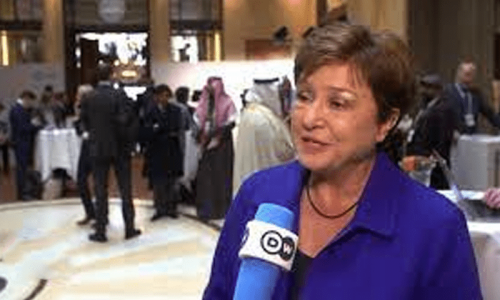
It is little wonder that the IMF has so far refused to extend the country any further help considering how skewed its priorities have been and how obstinately the powerful have been avoiding picking up the tab. Indeed, IMF managing director Kristalina Georgieva’s recent remarks urging “a fairer distribution of the [inflationary] pressures by moving subsidies only towards the people who really need it” had made her sound more concerned about the country’s ordinary citizens than our own leaders.
The federal government, which must eventually turn to the public, has since been shamed out of its inaction. The armed forces, too, are reportedly drawing up proposals to slash non-combat expenditures.
It remains to be seen how the provincial governments and the judiciary respond. The powerful should not expect the masses to continue acquiescing in their extravagance while they struggle to put food on their own table.
Published in Dawn, February 24th, 2023