Pakistan’s poor should benefit from subsidies, not the wealthy: IMF chief


 0
0


International Monetary Fund (IMF) Managing Director Kristalina Georgieva has stressed that Pakistan needs to protect the poor and tax the wealthy while ensuring that subsidies are targeting those who really need them, it emerged on Sunday.
In an interview on the sidelines of the Munich Security Conference on Friday, the IMF chief said: “My heart goes to the people of Pakistan. They have been devastated by the floods that affected one-third of the population of the country.
“What we are asking for are steps Pakistan needs to take to be able to function as a country and not to get into a dangerous place where its debt needs to be restructured,” she said.
“I want to stress that we are emphasising two things. Number one, tax revenues. Those who can, those that are making good money [in the] public or private sector need to contribute to the economy. Secondly, to have a fairer distribution of the pressures by moving subsidies only towards the people who really need it.
“It shouldn’t be that the wealthy benefit from subsidies. It should be the poor [who] benefit from them,” she said. “And there the Fund is very clear. We want the poor people of Pakistan to be protected.”
Pakistan held 10 days of intensive talks with an IMF delegation in Islamabad — from Jan 31 to Feb 9 — but could not reach a deal.
The IMF, however, said in an earlier statement that both sides have agreed to stay engaged and “virtual discussions will continue in the coming days to finalise the implementation details” of the policies, including the tax measures, discussed in Islamabad.
The government is in a race against time to implement the tax measures and reach an agreement with the IMF as the country’s reserves have depleted to a critically low level of $2.9 billion, which experts believe is enough for only 16 or 17 days of imports.
The agreement with the IMF on the completion of the ninth review of a $7bn loan programme would not only lead to a disbursement of $1.2bn but also unlock inflows from friendly countries.
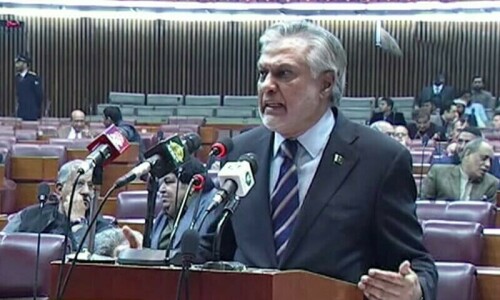
Finance Minister Ishaq Dar on Wednesday tabled the Finance (Supplementary) Bill, 2023, in both houses of the parliament, outlining tax measures to raise an additional Rs170bn in the next four and half months to meet the last prior actions agreed upon with the IMF.
The IMF has given a deadline of March 1 for the implementation of all these measures. However, the bulk of tax measures worth Rs115bn was already implemented from Feb 14 through statutory regulatory orders.