IAEA chief sees promising prospects for nuclear energy in Pakistan


 0
0


ISLAMABAD: Head of the International Atomic Energy Agency (IAEA) Rafael Grossi has a positive outlook for nuclear energy in Pakistan.
Speaking at a seminar hosted by the Center for International Strategic Studies (CISS), Islamabad, on Thursday, the IAEA director general noted the political will in Pakistan and the country’s technical capacity and nuclear safety record as the reasons for his optimism about the prospects for the expansion of nuclear energy.
“There is strong political support for new nuclear power plants in Pakistan,” said Mr Grossi. He observed that Pakistan has a world-class and impeccable nuclear safety record. Moreover, he said, the country has technical and engineering capacity for new nuclear power plants, including small modular reactors (SMRs), which indicated a promising future for nuclear energy and achieving Sustainable Development Goals (SDGs).
Speaking on the occasion, Minister for Planning and Development Ahsan Iqbal said Pakistan has a mutually beneficial relationship with the IAEA that included all areas of nuclear technology.
He said that despite ranking as low as 158th among carbon-emitting countries, Pakistan is among the countries severely affected by the climate change. Pakistan has achieved great milestones in nuclear science and technology for the socio-economic uplift of the country in areas such as cancer diagnosis and treatment, development of disease-free and high-yield crop varieties and food preservation.
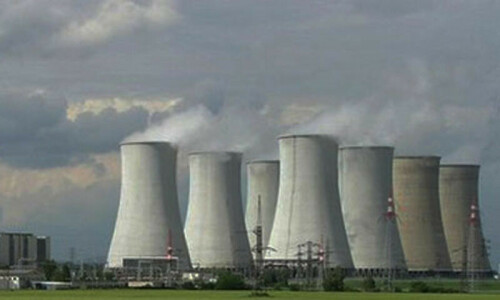
He said the nuclear power provides clean and cheap energy and currently contributes to eight per cent of the country’s energy mix with six operational nuclear power plants. Pakistan has an impeccable nuclear safety and security record and plans to develop more power plants.
“To energy deficient and economically strained countries like ours, nuclear power is sustainable, clean, and a green source of energy in the overall energy mix, which also includes wind and solar power. It is the best solution to the challenge of climate change as well,” he said.
CISS Executive Director Ali Sarwar Naqvi, who has served as Pakistan’s permanent representative at the IAEA for five years, said in his welcome speech that Pakistan and the IAEA will continue to jointly contribute to a safer and cleaner world through their longstanding partnership. Climate change is one of the biggest threats to humanity due to its direct relation to water, food, and human security.
Published in Dawn, February 17th, 2023