Large-scale manufacturing (LSM) declined for the fourth consecutive month in December, shrinking 3.51 per cent year-on-year (YoY), data released by the Pakistan Bureau of Statistics (PBS) showed on Wednesday.
Big industry output has largely been declining since the start of the current fiscal year, with only a paltry rise recorded in August. There was a negative growth of 5.49pc in November, 7.7pc in October and 2.27pc in September on a year-on-year basis.
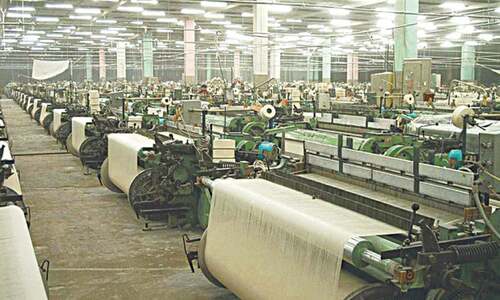
The YoY decline in December was led by the textile sector, which shrank 21.24pc, followed by automobiles (36.22pc), pharmaceuticals (12.72pc), iron and steel products (8.12pc) and chemicals (3.82pc).
On the other hand, the furniture sector posted a growth of 182.35pc, wearing apparel (25.5pc) and food (11.05pc).
However, on a month-on-month basis, LSM increased by 12.38pc.
PBS data showed that in the first half of the current fiscal year, LSM declined by 3.68pc compared to July-December 2021. The main contributors were textile (down 13.06pc), pharmaceuticals (21.56pc), non-metallic mineral products (11.72pc), coke and petroleum products (11.15pc), food (2.39pc) and chemicals (1.13pc).
“The production in July-December 2022-23 as compared to July-December 2021-22 has increased in wearing apparel, leather products, furniture and other manufacturing (football) while it decreased in food, tobacco, textile, coke and petroleum products, pharmaceuticals, rubber products, non-metallic mineral products, fabricated metal, electrical equipment, machinery and equipment, automobiles and other transport equipment,” the PBS noted.
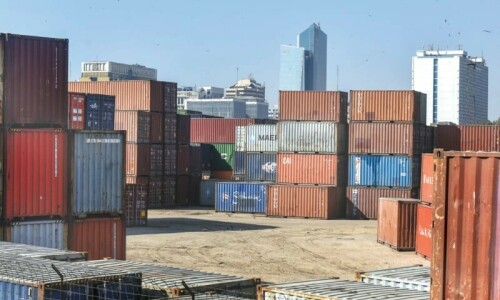
The decline in large-scale manufacturing comes amid the government’s ban on all but essential food and medicine imports until a lifeline bailout is agreed with the International Monetary Fund (IMF). Businessmen say the import ban, which has been imposed as the country’s foreign exchange reserves decline to a critically low level, will leave millions jobless.
Alongside a shortage of raw materials, soaring inflation, rising fuel costs and a plummeting rupee have battered manufacturing industries.
Industries such as steel, textiles and pharmaceuticals are barely functioning, forcing thousands of factories to close and deepening unemployment.