Indian police detain students for screening BBC documentary on Modi


 0
0


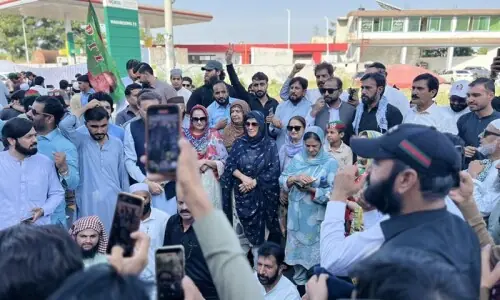
Indian police on Friday detained students in New Delhi after stopping the screening of a BBC documentary on Prime Minister Narendra Modi’s role during deadly sectarian riots in 2002.
The students at Delhi University had followed several campuses around the country in staging a broadcast, defying government efforts to stop its spread by blocking its publication on social media.
Police swarmed the university after student groups supportive of Modi’s ruling party objected to the screening, seizing laptops and imposing a ban on assemblies of more than four people.
Police officer Sagar Singh Kalsi told Indian news channel NDTV that 24 students were detained.
The two-part BBC programme alleges that Modi had ordered police to turn a blind eye to deadly riots while he was chief minister of Gujarat state.
The violence began after 59 Hindu pilgrims were killed in a fire on a train. Thirty-one Muslims were convicted of criminal conspiracy and murder over that incident.
At least 1,000 people, mostly Muslims, died in the unrest that followed.
The documentary quoted a previously classified British foreign ministry report which said the violence was “politically motivated” and the aim “was to purge Muslims from Hindu areas”.
The report also claims that the riots were impossible “without the climate of impunity” created by Modi’s administration.
India has dismissed the series as a “hostile” propaganda piece and ordered big social media platforms like Twitter and YouTube to block sharing or streaming it under controversial information technology laws.
Earlier this week, authorities at New Delhi’s prestigious Jawaharlal Nehru University also banned an attempted screening and warned of “strict disciplinary action” if the edict was ignored.
But defiant groups of students there and at numerous college campuses across India have gathered to watch the documentary on laptops and phone screens.
Modi ran Gujarat from 2001 until his election as prime minister in 2014 and briefly faced a travel ban by the United States over the violence.
An investigation team appointed by the Indian Supreme Court to probe the role of Modi and others in the violence said in 2012 it did not find any evidence to prosecute him.