BASRA: Iraq on Friday welcomed football teams from across the region for the Gulf Cup, ending nearly three decades of repeated bans on international matches in the war-torn and corruption-plagued country.
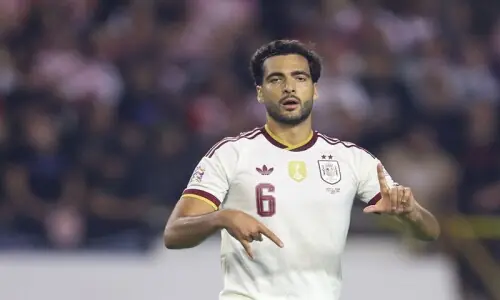
The tournament in the southern city of Basra brings together eight teams, with Friday’s opening match seeing the host nation take on Oman, which ended in a goalless draw.
More than 10,000 foreign fans had arrived by the afternoon in the city, located a short distance from Iraq’s borders with Kuwait and Iran, an official from Basra’s provincial government said.
Flags of the participating countries fluttered in the breeze at Basra’s corniche, which runs along the Shatt al-Arab river, and the scent of shisha wafted from coffee shops.
Omar Badr, a 22-year-old from Kuwait, was enthused by the local hospitality. He said some restaurants have offered fans free meals “and people invite us to their homes”.
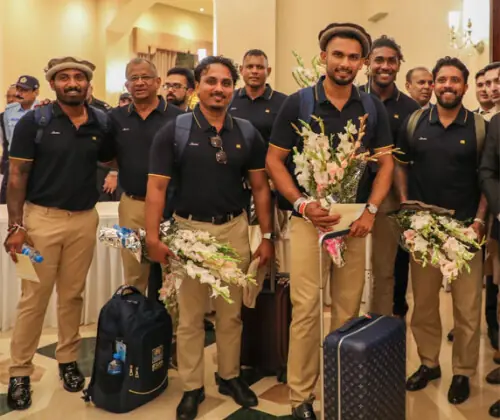
Teams from Bahrain, Kuwait, Oman, Qatar, Saudi Arabia, the United Arab Emirates and Yemen have all arrived in town.
It is the first time Iraq hosts the regional competition since 1979, the same year Saddam Hussein seized power in Baghdad.
Decades of turmoil followed with the 1980-1988 war against Iran, Iraq’s 1990 invasion of Kuwait and the subsequent Gulf War, the US-led invasion of Iraq in 2003 and a bloody sectarian civil war lasting from 2006 to 2008.
The invasion of Kuwait saw Iraq banned by FIFA, world football’s governing body, and subsequent sporadic bans were imposed until early 2022 due to instability in the country.
Iraq was scheduled to host the competition in 2014 but it was moved to Saudi Arabia due to security concerns, with the Islamic State (IS) group occupying large parts of Iraqi territory at the time.
The oil-rich country recently celebrated five years since it defeated IS, and despite sporadic jihadist attacks against the army and the police in northern Iraq, a semblance of stability is returning.
Three decades after the Kuwait invasion, Iraqis are now enthusiastically welcoming their neighbours.
Mohammed al-Azemi, a 39-year-old football fan from Kuwait, said “social and family ties” unite the two countries. “The brotherly relationship between [us]... is back on track.”
Louay Mansour, a nurse from Basra, said: “God be praised, the Gulf Cup is back. We hope it will be crowned with success.”
Tournament organisers have undertaken major infrastructure projects to help Iraqis forget their years in the football wilderness.
Basra is now home to two stadiums: the 65,000-capacity International Stadium, opened in 2013, and the 30,000-seat Minaa Olympic Stadium, inaugurated just two weeks before the tournament.
The city has had a makeover, with renovations to the corniche, new hotels built and streets repaved.
In total, Baghdad allocated $33 million to the Iraq Football Association to organise the Gulf Cup.
Locals including taxi driver Mohaned Abdelaziz expressed hope that the event would generate “positive economic spinoffs and... create jobs”.
Basra province is rich in oil, yet sees high unemployment and shortages in public services like electricity and clean drinking water -- all exacerbated by the devastating effects of climate change.
Iraq suffers from dilapidated infrastructure and rampant corruption, ranking near the bottom of Transparency International’s corruption perceptions index, at 157 out of 180 countries.
For Abdelaziz, a father of four, “the expenses for the preparations [of the tournament] are surprising”. “What we need is housing and public services,” he said.
Published in Dawn, january 8th, 2023