ISLAMABAD: The power sector default now stands at Rs2.5 trillion in addition to Rs2.6tr of circular debt despite over Rs3.4tr of subsidies paid since 2007 and total power sector losses of Rs5.7tr, a direct outcome of bad policies pursued by successive governments on the advice of the World Bank, Asian Development Bank and USAID.
The poor governance structure controlled by the federal bureaucracy without taming the independent power producers (IPPs) —the elephant in the room — has equally responsible for aggravating the power sector crisis.
Moreover, the sovereign guarantees provided by the government to borrow from commercial banks to finance the power sector deficit had crossed Rs2.055tr in September 2021 while crowding out the private sector borrowing.
Pide study asks for a forensic audit of power firms, a complete halt on sovereign guarantees
Power sector default (Rs2.5tr) refers to receivables of the electricity companies against various consumers including federal and provincial governments and private consumers.
Concluding this based on a fresh study, the Pakistan Institute of Development Economics (Pide) — a state-run think tank — and the government differed publicly on the proposed induction of 10,000MW of renewable energy (RE) plants and proposed advanced metering infrastructure (AMIs) through the private sector.
Launching “Power Sector: An Enigma with No Easy Solution,” Power Minister Khurram Dastgir Khan said the government was set to hold an auction for 600MW of RE plants in the first half of February and ramp this up to 10,000MW for fossil fuel replacement and give “massive push” for AMIs for loss reduction-starting with heavy users, followed by bulk consumers and eventually all consumers would have AMIs.
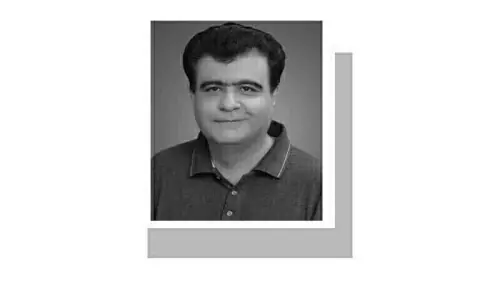
The study, co-authored by Pide Vice-Chancellor and former deputy chairman Planning Commission Nadeem-Ul-Haq and leading energy expert Tahir Basharat Cheema, on the other hand, among other things proposed “a moratorium on IPPs, including the proposed solar projects of 10,000MW” in the short term.
The study was completed by “Pide Power Commission led by Mr Cheema and comprising incumbent and former public sector electricity experts including NTDC General Manager Planning Engr Salis Usman, former CEO of Faisalabad Electric Supply Company Engr Mujahid Islam Billah, CFO Pakistan Electric Power Company Basharat Ali, Deputy Manager NTDC Engr Sajad Haider Syed, former GM National Power Control Centre (NPCC) Engr Masood Akhtar, PEPCO Director Finance Engr Azhar Iqbal, GM Monitoring Power Planning & Monitoring Company Engr Adnan Riaz Mir and former GM NPCC Engr Abdul Qadeer Khan.
Mr Cheema said the study found startling results that all IPPs — from thermal to hydro to RES — earned exorbitant profits mainly through three means, including over-invoicing in power purchase agreements (PPAs), wrongful interpretation of various clauses of PPA or outright fraud — hence it could be safely concluded that “elephant in the room is the IPPs and we have not been able to take it out”.
He said most people keep bad-mouthing IPPs and yet have not been able to address the problem and hence it was imperative to conduct a forensic audit of the IPPs by the Auditor General of Pakistan assisted by the private sector financial experts and correct it where unfair earnings are found or stop criticising them.
The study suggests a forensic audit of both public and private generation companies immediately, followed by recoveries without any relaxation for any IPPs, and asks for a complete halt on sovereign guarantees to investors in the future.
It also calls for a complete revamp of tariff design and to start the market with bilateral contracts keeping transmission constraints and participants’ capacities in mind.
“The root of this (power sector) challenge” comes from long-term and unviable contracts with private investors on the advice of the World Bank without analysing their impact and the mistake was repeated again and again, trapping the economy.
The study says the sectoral managers and decision-makers, mostly non-professional bureaucrats could not tackle the circular debt and the power sector default because “they rely on WB, ADB, USAID advice, who don’t understand ground realities. The lenders and our bureaucracy are responsible for this prolonged menace” as structural issues remain untouched.
Former member PC Syed Akhtar Ali, however, cautioned against bashing IPPs, particularly Chinese investors and reminded that Reko Diq episode should be a guide and argued that the country would have earned $2bn by now with the implementation of the original Reko Diq agreement but instead we had to pay $1bn out of pocket for nothing.
Published in Dawn, December 28th, 2022