PARIS: As the costs of importing energy soars worldwide and climate crises wreak havoc, interest in nuclear power is on the rise with nations scrambling to find alternative sources.
Investment in nuclear power declined after Japan’s 2011 Fukushima disaster, the world’s worst nuclear accident since Chernobyl in 1986, as fears over its safety increased and governments ran scared.
But following Moscow’s invasion of Ukraine in February, the subsequent squeeze on energy supplies and Europe’s push to wean itself off of Russian oil and gas, the tide is now turning back in favour of nuclear.
Governments face difficult decisions with rising gas and electricity bills and scarce resources threatening to cause widespread suffering this winter.
Some experts argue that nuclear power should not be considered an option, but others argue that, in the face of so many crises, it must remain part of the world’s energy mix.
One of the countries reconsidering nuclear energy is Japan, where the 2011 accident led to the suspension of many nuclear reactors over safety fears.
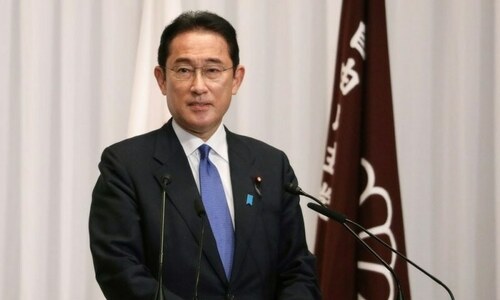
This week Japan’s Prime Minister Fumio Kishida called for a push to revive the country’s nuclear power industry, and build new atomic plants.
Other countries that were looking to move away from nuclear have discarded those plans — at least in the short term.
Less than a month after Russia’s attack on Ukraine, Belgium delayed by a decade its plan to scrap nuclear energy in 2025.
While nuclear power, currently used in 32 countries, supplies 10pc of the world’s electricity production, the International Atomic Energy Agency (IAEA) raised its projections in September for the first time since the 2011 disaster.
The IAEA now expects installed capacity to double by 2050 under the most favourable scenario.
Climate reasoning
Even in Germany, Europe’s biggest economy, sticking with nuclear is no longer a taboo subject as the energy crisis rekindles debate on shutting down the country’s last three nuclear power plants by the end of 2022.
Berlin said last month it would await the outcome of a “stress test” of the national electric grid before deciding whether to stick with the phaseout.
Greenpeace Germany’s climate and energy expert, Gerald Neubauer, said turning to nuclear was “not a solution to the energy crisis”.
He said nuclear energy would have “limited” efficacy in replacing Russian gas since it is mainly “used for heating” in Germany not for electricity production.
“The reactors would only save the gas used for electricity, it would save less than one per cent of the gas consumption,” he added.
But according to Nicolas Berghmans, energy and climate expert at the IDDRI think tank, extending the use of nuclear “can help”.
“Europe is in a very different energy situation, with several overlapping crises: the problem of Russian gas supply, the drought that has reduced the capacity of dams, the French nuclear plants’ weak output... so all the levers matter,” he said.
The pro-nuclear lobby says it is one of the world’s best options to avoid climate change since it does not directly emit carbon dioxide.
In fact, nuclear energy accounts for a bigger share of the world power mix in most of the scenarios put forward by the IPCC, the UN’s climate experts, to alleviate the global climate crisis.
Divided opinions
As the need for electricity booms, several countries have expressed a desire to develop nuclear infrastructure including China — which already has the largest number of
reactors — as well as the Czech Republic, India and Poland since nuclear offers an alternative to coal.
Likewise, Britain, France and the Netherlands have similar ambitions, and even the United States where President Joe Biden’s investment plan encourages the sector’s development.
The IPCC experts recognise that the deployment of nuclear energy “can be constrained by societal preferences” since the subject still divides opinion because of the risk of catastrophic accidents and the still unresolved issue of how to dispose of radioactive waste safely.
Some countries, like New Zealand, oppose nuclear, and the issue has also been hotly debated in the European Union over whether it should be listed as a “green” energy.
Last month, the European Parliament approved a contentious proposal giving a sustainable finance label to investments in gas and nuclear power.
Other issues remain over nuclear infrastructure including the ability to build new reactors with costs and delays tightly controlled.
Berghmans pointed to “long construction delays”.
“We’re talking about medium-term solutions, which won’t resolve tensions in the market”, as they will arrive too late to address climate crises, he said, but suggested focusing on the “dynamic” renewable energies sector that can be immediately helpful.
Published in Dawn, August 28th, 2022