0
0

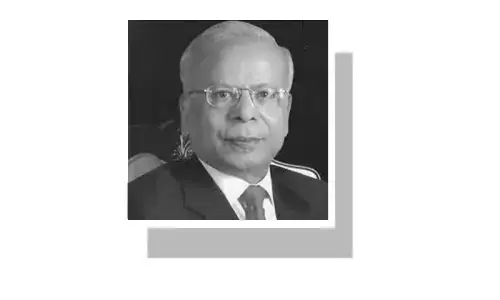
SWABI: A court here on Friday acquitted seven people, including former president of the Supreme Court Bar Association Abdul Lateef Afridi, on the charge of killing anti-terrorism court judge Aftab Afridi and his four family members last year.
Additional district and sessions judge Abid Zaman declared that the prosecution had failed to prove its case against the accused, including Lateef Afridi, his son and former civil judge Danish Afridi, Bilal Afridi, Daud Afridi, Aziz Afridi, Zakir Shah and Shehzad.
ATC judge Aftab Afridi, who was posted to Swat, came under a gun attack near Ambar Interchange on April 4, 2021, when he was travelling in his vehicle with his family on the Peshawar-Islamabad Motorway.
The ambush killed the judge, his wife and his pregnant daughter-in-law along with her three-year-old son and injured his guard and driver.
The Chota Lahor police station had registered the FIR of the attack on the complaint of the slain judge’s son, Abdul Majid Afridi, who named several people, including Lateef Afridi, for the murders.
The accused were booked under sections 302, 324, 353, 427 and 109 of the Pakistan Penal Code and Section 7 of the Anti-Terrorism Act. The challan (final charge sheet) of the case was submitted to the Mardan ATC afterwards.
Earlier this year, the Peshawar High Court had ordered the removal of Section 7 of the Anti- Terrorism Act from the case and ordered the transfer of the trial to a regular court.
The prosecution alleged that two of the accused, including Zakir Shah and Shehzad, were the gunmen, while Bilal Afridi, Daud Afridi and Aziz Afridi masterminded the murders.
Lateef Afridi was accused of abetting the crime.
Defence counsel Shabbir Hussain Gigyani, Mian Sher Akbar and Hussain Ali contended that their clients were falsely implicated in the case.
They added that the complainant and prosecution witnesses failed to prove the presence of the petitioners at the crime site, while the evidence available on record also confirmed it, so their testimony was not admissible.
The lawyers contended that it was a high-profile case but the police carried out “unfair investigation due to the pressure” of certain quarters.
They argued that the confessional statements of two of the accused were obtained under duress and by torture and that the accused were kept in illegal detention for many days.
The complainant’s counsel and state prosecutor contended that the motive behind the murder was clearly proved as both families had enmity.
They said two of the arrested killers had recorded their statements admitting their and others’ involvement in the crime. They also contended that the accused didn’t deserve leniency for killing the judge and his family members in a brutal manner.
Published in Dawn, December 24th, 2022