Investors call for consistent economic policies


ISLAMABAD: The Pakistani diaspora in the United States asked Islamabad on Tuesday to work out a long-term strategy to ensure predictability in policymaking along with ensuring ease of doing business to attract investment in the manufacturing sector.
The diaspora at a panel discussion on US-Pakistani Diaspora’s Commercial Investments in Pakistan shared current and future opportunities and challenges in sectors of construction, real estate, technology, tourism, hospitality, e-commerce and manufacturing.
The US Mission in Pakistan, through the United States Agency for International Development (USAID) and in close collaboration with the US-Pakistani diaspora, hosted a one-day engagement conference. More than 100 participants attended in person, including members of the US-Pakistani diaspora and prominent local business leaders.
Leading US-Pakistani businessmen identified a lack of consistency in policies, adequate energy, and improving ease of doing business to attract investments in Pakistan. It was also highlighted that there is no succession plan for a smooth transition of government as well as continuity of policies in Pakistan.
Pakistani diaspora in US highlights hurdles to investments
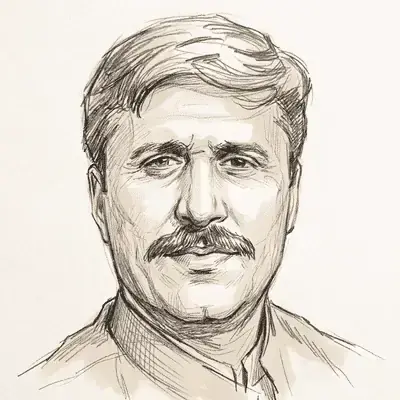
Prime Minister’s Ambassador at Large on Investments Zeeshan Shah agreed with most of the points highlighted especially the lack of consistency in policies. He said this is the outcome of an immature democratic government in Pakistan. The successive governments scrap previous governments’ policies, he deplored.
Mr Shah said this situation could be handled only through a long-term roadmap. “There is a need for a national charter of the economy”, he said, adding the charter will give certainty to economic policies.
It was also pointed out during the discussion that economic policies in Pakistan favour investments in real estate and encourage imports of finished goods. There is no effective plan to encourage investments in the manufacturing sector in Pakistan.
At the conference, United States Embassy Chargé d’Affaires Andrew Schofer emphasised that the United States considers the US-Pakistani diaspora as a key partner in the humanitarian, social, and commercial sectors in Pakistan.
Mr Schofer highlighted the long history of the US and Pakistan working together to advance Pakistan’s economic growth and solve development challenges. He also highlighted opportunities for future partnership: “As the Green Revolution improved lives in the past, a ‘Green Alliance’ between the US and Pakistan will help us jointly strengthen climate resilience, develop clean energy alternatives, and foster economic growth”.
The conference showcased key contributions and investments by the US-Pakistani diaspora in the humanitarian, social, and commercial sectors, and explored avenues for future joint engagements.
At the closing session, USAID signed two partnership memoranda of understanding with US-Pakistani diaspora entities: one with Datarocx to set up digital centers in Pakistan in the Special Technology Zones and the other with Global Semiconductor Group and HUM Network Limited for Pakistan Katalytic Fund to improve access to growth capital for established businesses in the technology sector.
Published in Dawn, December 21st, 2022