74
74

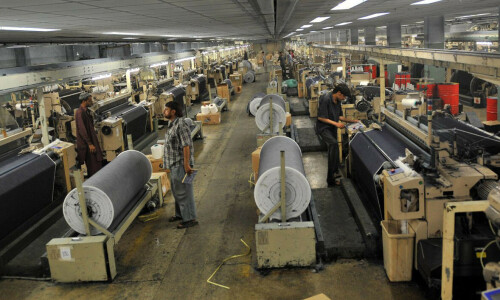
WITH the government left with little to offer except gimmicks, the economic situation is deteriorating by the day. According to a news report published in this paper’s Friday pages, large-scale manufacturing — a bellwether for economic activity — contracted by a staggering 7.75pc in October, registering a slowdown for the second straight month.
Since the start of fiscal 2023 (the July to October period), LSM has now contracted by an overall 2.89pc, indicating that the deceleration in economic activity seems to be getting worse with time.
Record energy and raw material prices are being blamed. The country’s inability to secure sufficient gas supplies for the winter has also raised fears that the slowdown may worsen in the coming months. Not only that, the major export industries are being deeply impacted, especially textiles, which posted a massive contraction of 24.6pc in October over the previous year.
Those numbers should be giving sleepless nights to the incumbent government, but it seems it is happy playing the fiddle while the economy burns. The same day as the LSM data was released by the Pakistan Bureau of Statistics, the government announced that it was working on a plan to conserve energy and cut the import bill.
Short on details and big on buzzwords like “extraordinary measures”, all this plan apparently includes is a proposal to move key government buildings to solar energy and a crackdown on electricity theft.
Making the announcement, the information minister claimed these measures will save “billions of dollars” on the import bill, but observers later pointed out that the impact would be much lower and that her math was all off. Such plans won’t do much to help the industrialists worried sick about looming shortages of raw materials for production.
The State Bank’s restrictions on paying for anything imported from abroad — even goods that have already landed at our ports and are incurring demurrages — will soon lead to shortages of essential goods in domestic markets, manufacturers have warned.
Recent reports have also pointed to a contraction in remittances, which analysts say is likely happening because the official exchange rate is so far below market rates that more people may be opting to send money back home through the illegal hundi and hawala channels.
Global economic conditions are not particularly healthy either, putting pressure on people’s pockets, and higher interest rates in more established economies may be luring funds there that may otherwise have been remitted for investment. Whatever the case may be, this spells more problems for Pakistan.
Declining exports, slowing manufacturing activity and falling remittances make for a toxic cocktail of economic challenges for the government.
The likelihood of mass layoffs in affected industries seems almost inevitable, which will, in turn, fuel even more social upheaval and public dissatisfaction. If this government is serious about surviving its tenure, it better watch its step.
Published in Dawn, December 19th, 2022