IF the Afghan Taliban want the world to grant them legitimacy, then they should be able to fulfil the duties of a responsible government. This includes maintaining calm at the borders, and preventing their own fighters or other militants from attacking innocent people across the frontier.
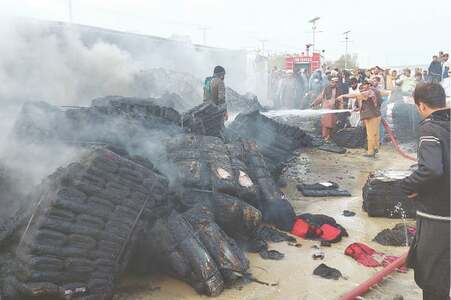
The tragic incident at the Pak-Afghan border in Chaman on Sunday indicates that either Kabul’s rulers are incapable of securing their borders, or that some elements within the Taliban want to test Pakistan’s limits.
At least seven deaths were reported on the Pakistani side after Afghan forces resorted to unprovoked shelling at the border town, says ISPR, with Pakistan’s security personnel returning fire.
The skirmish resulted in the brief closure of the border crossing, and appeared to be a repeat of a similar incident last month that resulted in the closure of the Chaman crossing for more than a week. Then, too, gunfire from Afghanistan had resulted in casualties here.
The prime minister has condemned the incident, calling upon the Afghan rulers to ensure such episodes are not repeated.
Certain reports say that smugglers were trying to cross the fenced border area into Pakistan, reportedly with support from the Taliban forces, though some Afghan officials link the flare-up to the construction of checkpoints in what they claim is Afghan territory.
Pakistan should clearly communicate to the Taliban that it is ready to defend itself from aggression.
It is unfortunate that while it is the Taliban’s responsibility to keep the peace on their soil, they have not, previously as well as now, reined in violent, lawless elements, including militants — a fact that Pakistan, which has suffered as a consequence, cannot lose sight of. It is in this context that Pakistan must display firmness, despite its support for the Afghan people.
It is the Taliban’s responsibility to restrain smugglers, terrorists and criminal elements trying to sneak into Pakistan.
Also, there should be no revanchist illusions: the Pak-Afghan border marks the frontier between two sovereign countries, and fantasies about redrawing the Durand Line must be abandoned.
Thanks to their regressive worldview, the Afghan Taliban have an image problem globally. Pakistan has nevertheless — even during the rule of the pro-West Ashraf Ghani regime — called for the international community to engage with the Taliban to ensure that Afghanistan does not implode, for the sake of its poverty-stricken people.
The Taliban need to realise this and take steps to allay Pakistan’s concerns.
Primarily, they must secure their side of the border to guarantee there is no hostile activity directed at Pakistan, while if ties become strained, they must be immediately addressed through dialogue instead of any resort to violence.
Secondly, those anti-Pakistan terrorists that have sought refuge in Afghanistan should be neutralised so that they are no longer able to harm this country.
Anything less may cause Pakistan to reassess its ties with the Taliban.
Published in Dawn, December 13th, 2022