0
0

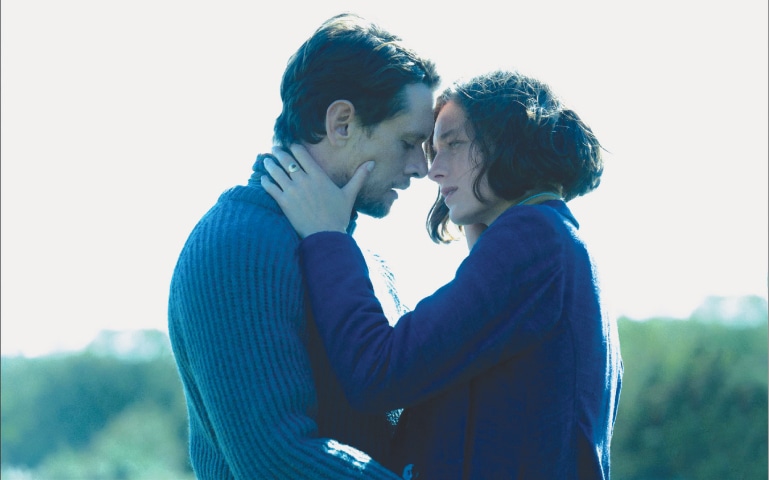
It is easy to understand the appeal of D.H. Lawrence’s novel Lady Chatterley’s Lover (1928) for filmmakers. The issues the novel addresses are so rich. Written in response to the general strike of 1926 in the UK, the story examines the sources of class enmity and imagines how it might be overcome through tenderness, touch and sex.
Many, including the author Doris Lessing, have argued that Lady Chatterley’s Lover can only be understood in the context of its time and societal stresses. However, this latest film version strips out the social context and class detail of the novel and with them go most of the psychological complexity of the characters, leaving simply a love story with a happy ending.
In the book, Constance Reid, who has been raised in a bohemian upper-middle-class family, marries the aristocrat Clifford Chatterley. Shortly after their marriage, he is paralysed from the waist down in World War I. On his father’s death, he becomes a baronet and takes Constance to live in his ancestral home in the Midlands (Wragby Hall), also taking ownership of an adjacent colliery in the village of Tevershall.
His injuries mean that Sir Clifford is unable to father an heir, so he coldly suggests that his wife gets pregnant by another man. However, rather than simply sleeping with someone from their social circle, she starts an affair with her husband’s gamekeeper, Oliver Mellors.
Netflix’s Lady Chatterley’s Lover reduces this tale of class conflict to a simple love story
Mellors is working class by birth and preference, but has moved into the middle class through education and his promotion to the rank of lieutenant in the army. Like Constance, Mellors is unhappily married and displaced between classes. Together they must struggle to overcome their deeply-ingrained class attitudes, and it is a painful and unresolved process.
Playing down class tensions
The novel was written in three wholly different versions between 1926 and 1928, and each one reflects Lawrence’s pessimism about the future of England and his fear that a class war was imminent.
The general strike was called to try to force the British government to reverse both pay cuts and worsening conditions for miners. Coal seams had been depleted during the war and production was at an all-time low in the early to mid-1920s. A reduction in wages was proposed to maintain profits.
In the novel, there is an atmosphere of simmering unrest between the mine owners and the colliers. Sir Clifford plans to further mechanise his colliery, replacing men with machines. He seeks to develop coal by-products to maximise income. Local pits are only working for part of the week, and socialist and even Bolshevist ideas are gaining traction with the miners.
In this film, industrial unrest is condensed to a passing street protest. The brief glimpse we get of the mining village (Tevershall) makes it seem more like a pretty Dorset village in a Thomas Hardy novel than a Midlands colliery town in the 1920s.
Flat characters
The worst flattening of the novel comes in the film’s depiction of the class struggle between Constance and Mellors.
In the book, Lawrence’s Constance Chatterley is empathetic towards Clifford’s servants and staff and she takes an interest in the plight of his workforce. But, at times, she tends to stereotype the working classes and revert to a learned form of snobbishness.
We see her inner conflict play out when she first views Mellors washing at the back of his cottage in Wragby wood. It is a confusing encounter, which arouses class-based disgust, while also confronting her with feelings of physical attraction.
On one level he is “merely a man washing himself! Commonplace enough, heaven knows.” But on another, it is “a visionary experience” which hits her “in the middle of her body.” The film’s Constance Chatterley suffers no such inner dilemma. She merely views the man and giggles. She doesn’t need to root out any internalised class prejudice.
Lawrence has Mellors speak two languages: a Derbyshire-inflected regional speech and dialect, and received pronunciation. Mellors and Constance have to find a middle ground beyond the divisions of class and language. They achieve this by mimicking one another’s language and laughing away their differences.
Constance comically imitates Mellors’ regional speech patterns and he teaches her new meanings for the proscribed words “c” and “f” which transform them from terms of abuse into poetic words for sex and the mysterious experiences of the body. Mellors, in turn, lets down his psychological barriers, coming to see her not as “your ladyship” (an embodiment of the Chatterleys and the ruling classes more generally) but as Connie.
They jokingly call their sexual organs “John Thomas” and “Lady Jane”, parodying names and titles. He gradually finds a language with which to respond to Connie as a woman he loves, rather than a lady he serves.
In the film, however, this is all gone. Mellors speaks throughout with the same slight regional inflection. There is no linguistic readjustment required. The only resentment he seems to feel is irritation when she first asks for a key to his hut, or temporary outrage that he has been used when she tells him she is pregnant.
At one point in the movie, Sir Clifford’s nurse, Ivy Bolton, even says outright: “This is a love story.” In terms of the film, she’s absolutely right.
There are things to enjoy. The music is atmospheric and hints at emotional depths and nuances that the script skates over. The scene in which Connie and Mellors cavort naked in the rain has a joyous sensual quality. This scene reminded me a little of Lawrence’s paintings Dance-Sketch and Fire-Dance.
But the characters are so flat that those who have read the novel will be disappointed and those who haven’t will wonder what all the fuss was about.
The writer is an Associate Professor of English Literature at the University of Nottingham in the UK
Republished from The Conversation
Published in Dawn, ICON, December 11th, 2022