35
35

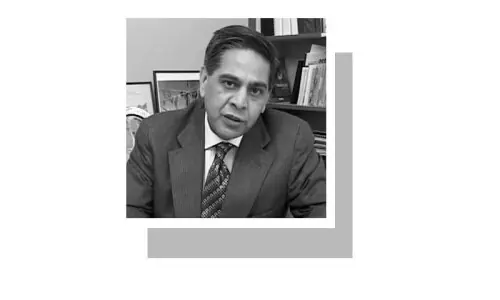
KARACHI: Does the founder and group CEO of Daraz, largest player in Pakistan’s ecommerce market of $1.5 billion, think the country is a difficult market to operate in?
“Absolutely. I’d say so,” said Bjarke Mikkelsen, who heads the Alibaba-owned ecommerce platform operating in Pakistan, Sri Lanka, Bangladesh and Nepal.
In an interview with Dawn during his one-day visit for the inauguration of the country’s first automated smart distribution centres in Karachi and Lahore, Mr Mikkelsen said the single biggest challenge in ecommerce in Pakistan is of low trust and seller education.
The group CEO of the online marketplace, which claims to have a 35 per cent share in the national ecommerce pie with 20 million active monthly users, believes the trust deficit problem is peculiar to developing countries.
“If the seller sends a red t-shirt instead of a blue one, that only undermines trust. The customer will not buy again. We can only be as good as our sellers,” he said, adding that the trust deficit exists in developed markets like the United States and Europe to a “much, much lesser extent”.
Consistent efforts by the company have brought down the percentage of quality-related returns, a measure of customer satisfaction in ecommerce, from 2pc of total orders to 0.7pc in recent years, he said. “We’re at an inflection point now as the trust in the market reflects the way things were maybe three, four years ago,” he said.
Notwithstanding the eye-popping numbers, Daraz has consistently been in loss for the eight years of its operations in Pakistan. “We’re still three, four years from breaking even, (from) making money... The last many years have been all about growth. We’ve been capturing the market, building the ecosystem. It’s been expensive. We spent $100m doing that in Pakistan in the last three years,” he said.
In repeated references to the recent “blow-ups” of quick-commerce start-ups that promised grocery deliveries in 30 minutes after raising mind-boggling sums from venture capitalists, Mr Mikkelsen said Daraz believed in building a sustainable business. “We’re here for the long term.”
The launch of the two automated smart distribution centres will turbocharge the company’s operational capacity, said Mr Mikkelsen.
The company has set up the “most technologically advanced logistics facilities in South Asia” in partnership with Cainiao Network, logistics arm of the Alibaba Group, at a total cost of $4m, he said.
These centres will have automatic assembly lines and utilise Cainiao’s proprietary solutions, including e- programmable logic controller, to ensure operational quality and stability. The facilities span over 50,000 square metres and hold the capacity to process 428,400 orders per day.
“It’ll let us scale our sorting capacity by over 4.2 times and reduce the number of manual errors by more than 90pc,” he said.
Published in Dawn, October 14th, 2022