Malala in Pakistan to visit flood-hit areas

Nobel laureate Malala Yousafzai arrived in Pakistan on Tuesday, visiting her home country after four years to travel to areas devastated by unprecedented monsoon flooding and meet flood victims.
Her visit aims “to help keep international attention focused on the impact of floods in Pakistan and reinforce the need for critical humanitarian aid”, her non-profit organisation, Malala Fund, said in a statement.
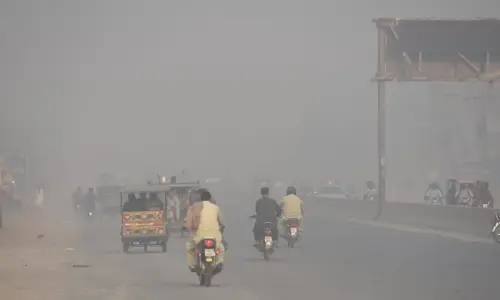
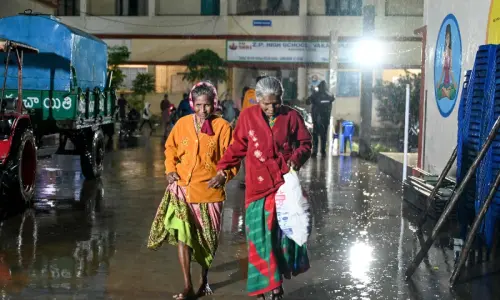
According to the latest estimates, the devastating floods have left 1,700 dead and displaced nearly eight million people in the country.
Earlier, Malala Fund issued an emergency relief grant to the International Rescue Committee (IRC) to support flood relief efforts and “protect the wellbeing of girls and young women in Pakistan”.
“With this grant, IRC will provide psychosocial support to girls in Balochistan by creating safe spaces for them, which will offer life skills training and provide menstrual and reproductive health management support,” a statement on the fund’s website said.
It added that for girls experiencing displacement or whose school buildings were destroyed or closed, the IRC would provide emergency education services.
The “IRC will also repair and rehabilitate 10 damaged girls’ government school buildings to ensure girls can return to school”, the statement read.
It further quoted Yousafzai as saying: “My heart breaks seeing the destruction in Pakistan and the lives of millions of people devastated overnight. I urge the international community to respond, not just with generous aid and assistance, but with immediate action on policies to curb climate change and establish climate-finance mechanisms.”
Malala’s second trip since 2012 attack
This is Yousafzai’s second visit to Pakistan since she survived a Taliban attack in Swat in 2012, which necessitated her departure to the UK for medical treatment. She landed in Karachi two days after the 10th anniversary of the attack.
Yousafzai last visited Pakistan in March 2018.
Her visit to Pakistan also coincides with the International Day of the Girl Child, which is observed every year on October 11 to recognise girls’ rights and the challenges they face — which aligns with the objectives of Yousafzai’s Malala Fund.
Yousafzai, who belongs to Swat, has been living in the United Kingdom since October 2012.
She was shifted from Pakistan to a hospital in Birmingham in a precarious condition after she had sustained a bullet in her head in a targeted attack by the banned Tehreek-i-Taliban Pakistan (TTP) in Swat. She was on her way home in a school van with other girls after taking an exam when the TTP men had opened fire on them. Two other girls also sustained gunshot wounds in the incident.
The attack on the schoolgirls had received widespread criticism at the national and international levels. Responding to the condemnation, the TTP had denounced Yousafzai, compelling her to stay back in the UK due to security concerns.
After her recovery, Yousafzai had announced the launching of a movement for the promotion of girls’ education.
In December 2014, Yousafzai and Kailash Satyarthi of India received the Nobel Peace Prize for risking their lives to fight for children’s rights.
In April 2017, United Nations (UN) Secretary General Antonio Guterres selected Yousafzai to be a UN messenger of peace, the highest honour bestowed by the UN chief on a global citizen.
Visit comes amid protests over rise in violence
Yousafzai’s visit comes as students at her former school join a strike over a rise in violence in her hometown of Mingora in the Swat Valley.
The TTP waged a years-long insurgency in Swat until a major military crackdown in the northwest of the country in 2014 restored security in the area.
But it has seen a resurgence of militancy since the Taliban returned to power across the border in Afghanistan last year.
There has been a spike in attacks in recent weeks, targeting mostly security forces.
On Monday, a driver was shot dead and a child was wounded in an attack on a school bus, prompting up to 2,000 students and teachers to walk out of classes.
Locals blamed the TTP, but the group has denied responsibility.
Students and teachers again walked out on Tuesday calling for peace in the region.
“People are angry,” principal Ahmad Shah told AFP on Monday. “Students from all the private schools came out to protest. “