32
32

Inflation measured by the Consumer Price Index (CPI) shot up to 27.26 per cent year-on-year (YoY) in August, data released by the Pakistan Bureau of Statistics (PBS) showed on Thursday.
In August 2021, CPI inflation had clocked in at 8.4pc.
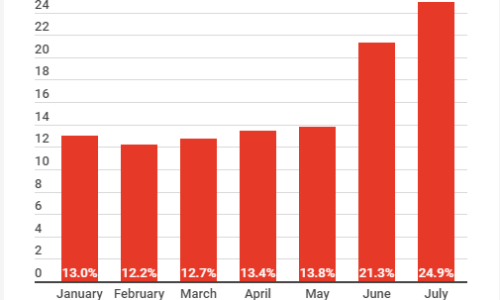
Last month, the YoY inflation was measured at 24.93pc, which was the highest figure in over 14 years.
PBS spokesperson Ateequr Rehman told Dawn.com that August’s 27.26pc was the highest figure recorded since 1973-1974.
Meanwhile, Arif Habib Corporation said August's figure was the highest since November 1973.
According to the PBS, inflation in urban and rural areas increased to 26.24pc and 28.70pc year-on-year, respectively.
On a month-on-month basis, the CPI showed an increase of 2.45pc.
The inflationary trend was driven by a double-digit increase in almost all sub-indices, especially transport, food and housing, and utilities.
Index-wise increase in inflation YoY:
- Transport: 63.08pc
- Perishable food items: 33.85pc
- Non-perishable food items: 28.25
- Housing and utilities: 27.57pc
- Restaurants and hotels: 27.43pc
- Alcoholic beverages and tobacco: 25.78pc
- Furnishing and household equipment maintenance: 21.86pc
- Recreation and culture: 21.78pc
- Miscellaneous goods and services: 19.97pc
- Clothing and footwear: 17.63pc
- Health: 11.89pc
- Education: 9.99pc
- Communication: 1.23pc
PBS data showed that electricity prices rose as high as 123.37pc year-on-year while motor fuels increased by up to 87.34pc.
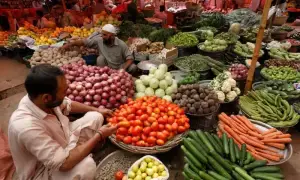
Prices of food items also skyrocketed, with rates of pulse masoor and onions rising by up to 118.64pc and 96.70pc, respectively, over the same month last year.
Pakistan, which was already in the grip of high inflation, witnessed catastrophic monsoon floods this season that have caused widespread destruction and sent food prices soaring, putting many staples out of the reach of the poor.
The floods have submerged a third of the country, killing more than 1,100 people and affecting over 33 million.
The rains — which began in June, and whose unusual intensity has been blamed on climate change — have also damaged vast swathes of rich agricultural land and crops. Parts of the mountainous north and breadbasket south have been cut off because roads and bridges have been washed away.
With millions of acres of farmland still under water and certain roads inaccessible, prices are expected to climb further.
Additional input from AFP.