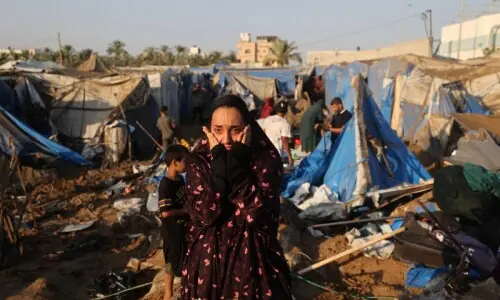
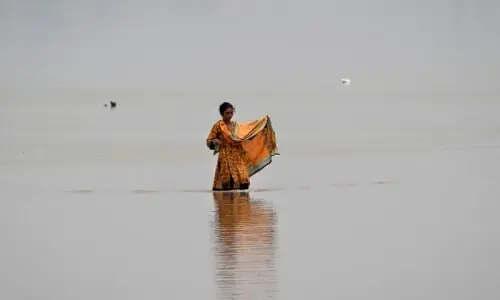
IT is a serious matter: the due date for approximately 73,000 of the over half a million pregnant women affected by the floods is this month, while around 577,000 others are set to give birth later. With access to medical facilities and personnel, including birth attendants, cut off at many places, it is uncertain how they and their families will cope at the time of delivery and after. Even under normal circumstances, access to healthcare for women, including those who are expecting, remains a big challenge in Pakistan. The statistics speak for themselves. The maternal mortality rate, according to the United Nations Population Fund, is 186 deaths per 100,000 live births — it may be an improvement over past years, but it is still higher than the statistics for many other developing countries. In normal circumstances, pregnant women have to bear with untrained midwives or rickety medical facilities at decrepit government hospitals where professional healthcare is near absent and wrong advice is often dispensed. The trauma of pregnant women in times of disaster then can only be imagined. It is a living nightmare for them — mentally and physically. Many of them are doubly at risk of contracting water-borne infections and being further malnourished with access to food limited at best. Those with complicated pregnancies face even greater hazards.
Besides the danger to the women themselves, there are also concerns for the health of the newborn infant. Babies born in these appalling circumstances will show the effects of poor nutrition and may contract birth-related infections. There is an urgent need for the authorities to take note of the looming threat and provide medical and nutritional assistance to pregnant women who have been affected by the floods. A comprehensive and well-managed plan must be drawn up quickly to render all possible assistance to this vulnerable segment. Given the experience of recent years, it is clear that climate change has come to stay and coping mechanisms for victims of natural calamities, especially women and children, must be put in place.
Published in Dawn, September 1st, 2022