IMF approves revival of Pakistan’s EFF programme, to release $1.17bn loan tranche: Miftah

The International Monetary Fund’s (IMF) executive board has approved the revival of Pakistan’s Extended Fund Facility (EFF) programme after which the country will receive the 7th and 8th tranche of $1.17 billion, Finance Minister Miftah Ismail said on Monday.
“Alhamdolillah the IMF Board has approved the revival of our EFF program. We should now be getting the 7th & 8th tranche of $1.17 billion,” he tweeted.
The minister went on to congratulate the nation and thanked Prime Minister Shehbaz Sharif for “taking tough decisions” and “saving Pakistan from default”.
Separately, in an interview with Geo News anchorperson Shahzeb Khanzada, Ismail said that all the executive directors had supported Pakistan’s request for the loan approval and extension except India.
Meanwhile, PM Shehbaz commended the finance minister, his team and other stakeholders for their hard work.
“The formal resumption of an IMF program is a major step forward in our efforts to put Pakistan’s economy back on track. It is outcome of an excellent team effort,” the premier said.
The IMF will now immediately disburse about $1.2 billion to Pakistan and may provide up to $4 billion over the remainder of the current fiscal year, which began on July 1.
However, an official statement is yet to be released by the global lender.
The development comes a day after the coalition government accused the PTI of “attempting to jeaopardise the IMF loan programme” after the Khyber Pakhtunkhwa government allegedly refused to implement the terms of the Fund’s agreement in a letter.
In the letter, KP Finance Minister Jhagra had said that the KP administration might find it difficult to run a provincial surplus this year in view of the flood-related damages.
It is pertinent to mention here that ensuring surpluses by the provinces this fiscal year is a key requirement previously agreed upon to revive the IMF programme.
Road to the agreement
Pakistan entered the IMF programme in 2019, but only half the funds have been disbursed to date as Islamabad has struggled to keep targets on track.
The last disbursement was in February and the next tranche was to follow a review in March, but the government of ousted prime minister Imran Khan introduced costly fuel price caps, which threw fiscal targets and the programme off track.
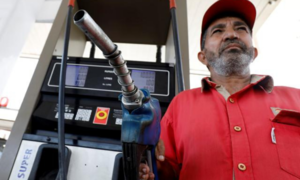
The new coalition government has removed the price caps, with petrol and diesel prices going up by as much as 66pc and 92pc in over a month.
On June 21, Pakistan’s authorities and the IMF staff mission reached an understanding on the current fiscal year’s federal budget to revive the stalled loan programme after authorities committed to generating Rs436 billion more taxes and gradually increasing the petroleum levy to Rs50 per litre.
As a result, the IMF staff in a statement acknowledged that important progress had been made over the federal budget. Based on this, Pakistan provided written commitment from the provinces to provide Rs750bn in cash surplus to the Centre to contain fiscal deficit within 4.9pc of GDP and help generate a Rs152bn primary fiscal surplus.
Moreover, Pakistan is now required to increase the electricity tariff by Rs7.91 per unit besides direct pass-through of monthly fuel cost adjustments in a timely manner to meet IMF demands.
On June 28, Ismail had announced that Pakistan had received the Memorandum of Economic and Fiscal Policies (MEFP) from the IMF for the combined seventh and eighth reviews.
The revised MEFP was based on budgetary measures announced by Ismail in his winding-up speech on the revised budget in the National Assembly, envisaging over Rs1.716 trillion (2.2pc of GDP) of fiscal adjustment, mostly through taxation, including 10pc super tax on 13 industries and personal income tax covering monthly incomes above Rs50,000 per month.
This is on top of a fixed tax regime for sectors like retailers, traders, jewellers, builders, restaurants, automobile and property dealers and so on.
This is the biggest fiscal adjustment in a single year that would help turn about Rs1.6tr primary deficit — the difference between revenues and expenditures excluding interest payments — during the current fiscal year into a Rs152bn surplus next year.