Danger of disaster at Ukraine’s nuclear plant rising ‘every day’

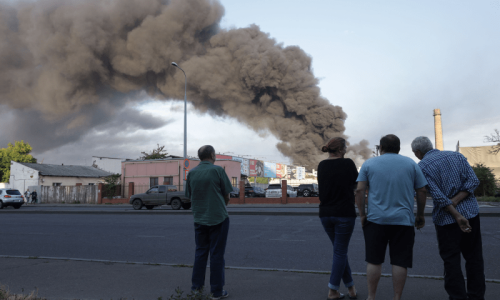
KYIV: The risk of disaster at Europe’s largest nuclear plant is “increasing every day”, the mayor of the city where it is located said on Sunday, after Ukraine and Russia exchanged blame for fresh shelling around the facility.
The Zaporizhzhia plant in southeastern Ukraine has been occupied by Russian forces since March, and Kyiv has accused Moscow of basing hundreds of soldiers and storing arms there. The facility has come under fire repeatedly in the past week, raising the spectre of a nuclear catastrophe.
“What is happening there is outright nuclear terrorism, and it can end unpredictably at any moment,” said Dmytro Orlov, the mayor of Energodar city where the plant is based.
“The risks are increasing every day,” he said by telephone from the Ukrainian-controlled city of Zaporizhzhia. He said there was mortar shelling on the plant “every day and night”.
First UN-chartered vessel transporting grain to relieve the global food crisis loaded with 23,000 tonnes of wheat
“The situation is hazardous, and what causes the most concern is that there is no de-escalation process,” he added.During his televised address on Saturday, Ukrainian President Volodymyr Zelensky accused Russia of nuclear “blackmail” and using the plant to “intimidate people in an extremely cynical way”.
He added Russian troops were “hiding” behind the plant to stage bombings on the Ukrainian-controlled towns of Nikopol and Marganets. But pro-Moscow officials in the occupied areas of Zaporizhzhia blamed the shelling on Ukrainian forces.
Missiles fell “in the areas located on the banks of the Dnipro river and in the plant”, said Vladimir Rogov, a member of the Moscow-installed administration, without reporting any casualties or damage.
A major consequence of the war has been soaring food prices after a Russian naval blockade and Kyiv’s mining of its ports prevented Ukrainian grain from being sold on global markets.
A landmark deal last month between Russia and Ukraine brokered by Turkey and the United Nations created safe corridors to allow key grain exports to resume.
And Kyiv on Sunday said the first UN-chartered vessel transporting grain from Ukraine to relieve the global food crisis was loaded with 23,000 tonnes of wheat and is ready to depart.
Published in Dawn, August 15th, 2022