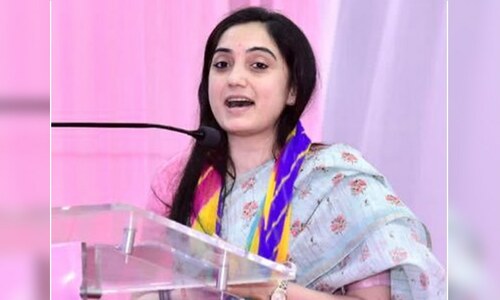
AMIDST the din of hateful rhetoric that tends to dominate the public discourse when discussing Muslims in today’s India, that country’s top court has made welcome observations regarding the incendiary comments spewed by a BJP spokesperson during a TV debate.
While hearing a number of complaints against the ruling party leader, the Indian supreme court observed that Nupur Sharma’s “loose tongue” had “set the country on fire” and that she “should apologise to the whole nation”.
The court’s firm words need to be compared to the often arrogant and insensitive remarks emanating from India’s executive branch, as well as heavyweights within the BJP, where Muslims are concerned.
The insulting remarks directed at the Holy Prophet (PBUH) by the party spokeswoman last month had elicited a strong reaction from India’s Muslims as well as Muslim states, with demonstrations sweeping the country and around 20 states summoning Indian envoys to express their displeasure.
Linked to the controversy was the grisly beheading of a Hindu tailor in Udaipur late last month allegedly by two Muslim suspects after the victim had reportedly supported the blasphemous remarks on social media.
In order to prevent communal frenzy, responsible pillars of the Indian state, as well as civil society, need to speak up against bigotry, much as the supreme court has done.
Read: India has turned Muslims into a 'persecuted minority', says Noam Chomsky
Unfortunately, under the BJP’s watch hate-mongers and Muslim-baiters have been given free rein to demonise the community, while the state itself has played a central role in legalising anti-Muslim discrimination. This has resulted in the ‘otherisation’ of Indian Muslims, as well as extremist reactions such as the one witnessed in Udaipur.
The ideologues of the Sangh Parivar want nothing more than there to be a permanent state of conflict between Hindus and Muslims. That is why progressive elements in India must play a bigger role in countering anti-Muslim venom.
Moreover, India is extremely sensitive to outside critique. That is why foreign states must call out New Delhi if it continues its prejudiced policies.
In this regard, Prime Minister Shehbaz Sharif raised the issue of Islamophobia in India with the US ambassador, while the American secretary of state had earlier expressed concern about “rising attacks on people and places of worship” in India.
The US needs to ask India to do more to protect its minorities, just as it asks its rivals — such as China — and countries like Pakistan to protect religious freedom. As for the rich Gulf Arab states, they also need to send a message to India that trade ties will be affected if anti-Muslim violence persists.
At the core of the matter is the fact that the Sangh Parivar and its political underlings refuse to acknowledge India’s Muslims as full citizens of the country, with fundamental rights to be protected. Fuelling the fires of communalism for petty political gains is dangerous and can have a long-lasting impact on India’s stability.
Published in Dawn, July 4th, 2022