MODERN times demand upgraded skills and improved literacy rate for societies to survive. Human development can be attained by focussing on the essentials, such as health, education, standard of living and intellectual capacity.
To enhance human development, we need to ensure human rights, equality, participation and effective institutions. The developed nations have succeeded because they worked hard in the post-industrial revolution world which saw the level of competition going up in global markets. The basic focus of all such countries was on human development.
European countries, the United States, the United Kingdom, Japan, China, Russia, Canada, Australia and such other countries continue to invest in terms of enhancing the abilities of their respective population. But countries, like Pakistan, lag behind in academic research and advancement.
One of the major reasons in this regard is the almost constant economic crises in such countries that take their toll on the education sector. In Pakistan, for instance, drastic budget cuts by successive governments for the higher education sector have left the country’s public-sector universities in the lurch. The universities hardly get one-third of what they need in the shape of budgetary allocations.
This imbalance between demand and allocations has forced the universities to admit more students on a self-finance basis — evening programmes, mostly — to overcome the deficit. In such a scenario, hostels, libraries, laboratories and playgrounds have become a burden that they can’t bear anymore.
Admissions in such huge numbers have also affected the academic and research capabilities of the universities. With additional workload, the faculty remains busy with the basics and there is no time to even think about human development. In the struggle to ensure their own financial survival, universities have lost their intellectual and research orientation.
The students get their degrees, but little else. It is not uncommon to come across university graduates unable to write a single paragraph without mistakes. The crowded classrooms hamper academic and psychological growth of the students who lose focus and find salvation elsewhere. In this age of sensory overload, immature minds take little time going astray. To counter the challenges, university administrations need to engage the students, but that is not their focus anymore.
Other than the universities, things are just as bad, if not worse, at the level of schools and colleges. Political gimmickries, like the so-called single national curriculum (SNC), do not help the cause one bit.
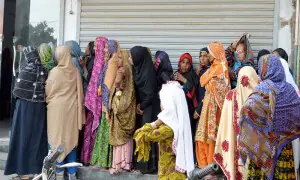
According to a United Nations (UN) agency, the dropout ratio in schools in Balochistan is 70 per cent and in erstwhile Fata it is 57pc. In Punjab and Sindh, poverty compels schoolchildren to find work, mostly in the agriculture sector, and students in Gilgit-Baltistan and Hunza have to live with poor school infrastructure, teacher absenteeism and lack of parental support. Regardless of the cause, illiteracy pushes most young people towards anything and everything except positive, healthy tendencies.
It is obvious that our education system needs structural reforms to ensure the quality of our graduates. The government should arrange enough funds and improved syllabus with innovative ideas for the growth of the young generation. In the fast-changing world of today, underdeveloped nations have no chance of joining the larger competitive mainstream.
Tufail Dawar
North Waziristan
Published in Dawn, June 24th, 2022