Bangladesh detains 450 Rohingya celebrating Eid on beach


COX’S BAZAR: Bangladesh police detained 450 Rohingya celebrating Eidul Fitr on a beach, officials said on Thursday, in a further sign of growing intolerance towards the refugees.
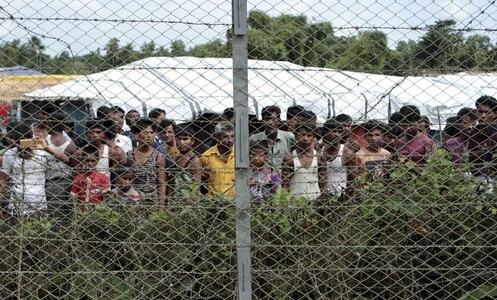
Bangladesh bans the 920,000 mostly Muslim Rohingya refugees from leaving camps surrounded by barbed wire in the southeast where they have been stuck for almost five years.
Most fled to Bangladesh after a military offensive in neighbouring Myanmar in 2017 that the United States designated in March as genocide.
Police spokesman Rafiqul Islam said that officers detained “more than 450 Rohingya” in raids in the town of Cox’s Bazar late on Wednesday on the second day of the Eid holidays, a major Muslim festival.
Islam said the operation was part of “security measures” in the country’s largest resort district which attracts millions of tourists during holiday seasons including Eidul Fitr.
“Rohingyas are involved in various crimes. It is unsafe for our tourists. We have strengthened the security of the city. As tourists visit Cox’s Bazar on Eidul Fitr, we have stepped up patrols to keep them safe,” he said.
Those detained were set to be sent back to the camps. Several refugees said at a police station that they went to the beach for Eid festivities.
“We are here for fun... But as soon as we arrived, police caught us. We did not do anything wrong, we just sat on the beach,” said Mohammad Ibrahim.
“Both my husband and I were picked up by police. My children are hungry.
They haven’t eaten all day,” said a woman named Samjida, 20.
‘Heavily curbed’
With a dialect similar to that spoken in Chittagong in southeast Bangladesh, the Rohingya are loathed by many in Myanmar, who see them as illegal immigrants and call them “Bengali”.
They have refused to go back until assured of security and equal rights — which Myanmar has refused to promise — so remain stuck in bamboo-and-tarp shacks with no work, poor sanitation and little education.
Bangladeshi authorities have become increasingly impatient about hosting the refugees while criticising the rest of the world for not providing more assistance.
In recent months authorities have bulldozed about 3,000 shops and dozens of private community-run schools in the camps.
The camps have seen an increase in violence blamed on the Arakan Rohingya Salvation Army, an insurgent group fighting the Myanmar military but also thought to be behind a wave of murders and drug smuggling.
Rezaur Rahman Lenin, a Dhaka-based activist and human rights consultant for the UN Resident Coordinator’s Office said that the lives of the refugees are “heavily curbed”.
“Rohingya youths have every right to pursue their happiness at the longest beach of the world and beyond,” he said.
“Bangladesh authorities should lift the restrictions on movement, allow markets and schools to reopen, and facilitate donors’ efforts to improve refugee access to livelihoods, health care, education and entertainment.”
Published in Dawn,May 6th, 2022