4
4

KARACHI: The long-awaited provincial climate change policy came under criticism as it reportedly neglected major environmental challenges being faced by Karachi as well as the threats posed by carbon-intensive energy generation in Thar that may turn Pakistan into a major air pollutant hotspot in coming years.
The Sindh Environmental Protection Agency (Sepa) had finalised the draft climate change policy and would now send it to the law department for vetting. The policy evaluates factors such as the effects of global warming and climate change in Sindh during the next three decades and consequent damages, to be borne by the society and economy.
At a programme — Review of Sindh climate change policy and implementation of framework — members of civil society, experts highlighted several important elements missing in the policy and observed that it did not recognise major environmental challenges Karachi faced.
The event was organised by The Knowledge Forum in collaboration with the National Commission for Human Rights (NCHR) at the latter’s Karachi office on Friday.
Draft document lacks details on plan to deal with heatwaves, urban flooding in Karachi
Explaining the main points of the climate change policy, Zeenia Shaukat representing TKF said civil society’s input and identification of technical gaps hindering the community agenda were crucial to ensuring that the policy was responsive to the impact of climate change being experienced by common citizens.
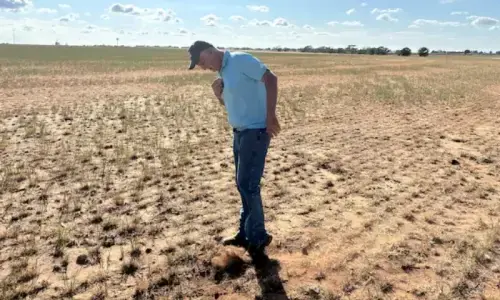
Citing the policy draft, she said the document projected the mean daily temperatures of Sindh to increase by 5°C during the 21st century whereas climatic patterns, such as incidence of droughts, heatwaves, air pollution and water insecurity, were predicted to become more common in coming years.
During the discussion, speakers shared that Sindh was a gas-rich region, which contributed about 70 per cent of the total gas production in the country.
However, experts pointed out that gas production coupled with expansion in LNG plants were deepening the province’s exposure to climate change risks as natural gas, particularly LNG, linked with high emission of methane, was a potent greenhouse gas.
On Karachi’s challenges, participants said the draft document lacked details on the strategies that could help tackle heatwaves, urban flooding and the risks posed by massive increase in concretised surfaces due to infrastructure development and significant reduction in groundwater levels.
The city, they said, had also seen drastic reduction in its tree cover with no serious effort on part of the government to ensure implementation of environmental laws.
The event also saw environmental experts, lawyers, journalists and civil society as well as rights activists demanding that the provincial government make the policy people-centric and develop an effective mechanism for tackling environmental challenges existing in rural and urban areas.
The participants of the consultation deplored the recent increase in taxes on the import of solar panels and said the government decision would discourage use of alternative energy sources.
The policy document, they said, made no mention of the district disaster management authorities, resettlement policy for the climate migrants and those affected by development projects.
In her remarks, Anis Haroon, NCHR member (Sindh), held politically influential people responsible for environmental degradation.
In this respect, she talked about the murder of Nazim Jokhio, who was fighting for wildlife protection.
“The powerful politicians have put enormous pressure on the deceased’s family to withdraw the case and the civil society and rights activists feel helpless to provide justice to the family,” she said.
Sepa’s Waqar Hussain Phulpoto shared that the climate change policy had been drafted in consultation with all stakeholders including the academia.
According to him, work on the policy started after the announcement of the federal government’s policy in 2012 and its framework in 2013.
“The document once vetted by the law department will be sent to the provincial cabinet for approval,” he informed the audience.
Speakers included activist Habibuddin Junaidi, urban planner M. Toheed, Mahnaz Rahman representing Aurat Foundation, Zahid Farooq from Urban Resource Centre and lawyer Altaf Hussain Khoso.
Published in Dawn, April 17th, 2022