NCOC marks two years of its successful fight against Covid-19

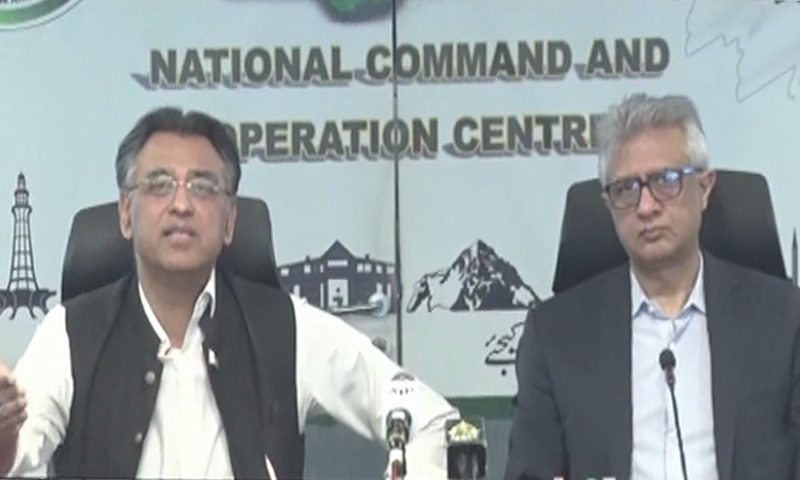
ISLAMABAD: The National Command and Operation Centre (NCOC) on Sunday marked two years of its establishment and celebrated its achievements to control the spread of Covid-19 in the country.
The NCOC used social media to make this announcement.
Earlier this month, Special Assistant to the Prime Minister (SAPM) on Health Dr Faisal Sultan said that the government had started deliberations to finally close the NCOC. He said the responsibility to deal with the Covid-19 related data would be passed on to the National Institute of Health’s Centres for Disease Control (CDC).
The NCOC was established on March 27, 2020. It has a major role to keep the nation updated on the Covid-19 related figures. The NCOC holds daily meetings, which are attended by Minister for Planning, Development and Special Initiatives Asad Umar, SAPM on Health Dr Faisal Sultan and National Coordinator Major General Muhammad Zafar Iqbal. Moreover, it has representation of all the provinces and administrative units.
The NCOC data is shared after every eight hours and updated at least once in a day.
A senior officer of the Ministry of National Health Services, requesting not to be quoted, said that through its free media campaigns the NCOC saved around Rs50 billion of the national exchequer. He further said that the NCOC ran 40 campaigns and its efforts were appreciated by Bill Gates, World Health Organisation (WHO) and a number of other organisations.
Meanwhile, the data of the NCOC showed that as many as 310 infections and five deaths by Covid-19 were reported in the country in the past 24 hours. The national positivity rate of Covid-19 was 0.96 per cent. The number of patients on critical care was 428.
On Saturday, Dr Sultan announced that 75pc vaccine eligible population (age 12 years and over) has been fully vaccinated.
The coronavirus strain behind Covid-19 was first detected in China in December 2019 and then started spreading to other countries. After many Covid-19 cases were in neighbouring countries, Pakistan closed its borders and took a number of steps to stop the transmission. The first case of Covid-19 was reported in the country in the last week of February, 2020.
On March 13, the first meeting of the National Security Committee (NSC), composed of the top civil and military leadership, was held to discuss the crisis which was later declared a pandemic by WHO.
Prime Minister Imran Khan chaired a meeting of the NSC and directed the authorities concerned to devise a comprehensive strategy to prevent the spread of the disease. However, lockdown in the country was announced on March 16, 2020, and many businesses, including construction industry, educational institutions, restaurants, marriage halls, were closed. Since the start of the pandemic, Pakistan has witnessed its five waves.
Published in Dawn, March 28th, 2022