'Political reasons' behind Pakistani MPs’ plane being denied Kabul landing last year: Qaiser

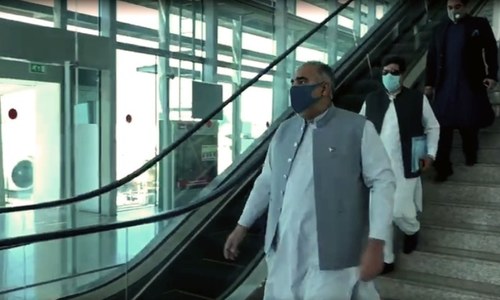
National Assembly Speaker Asad Qaiser disclosed on Thursday that a plane carrying Pakistani parliamentarians had not been allowed to land in Kabul last year due to “political reasons”.
Last year in April, a parliamentary delegation headed by Qaiser had departed for Afghanistan on a three-day official visit but had returned home within minutes after Afghan authorities did not allow their plane to land at Kabul airport.
At the time, it was reported that the landing was denied due to “security reasons”.
The Pakistani parliamentary delegation was going to Afghanistan on the invitation of then Afghan Wolesi Jirga speaker Mir Rehman Rehmani, who had later spoken to Qaiser to apologise over the incident.
However, the NA speaker commented on the situation for the very first time on Thursday, citing political reasons behind the incident.
“My visit to Afghanistan was hit by politics. I had not commented on the incident at the time,” Qaiser told a gathering of Pakistani and Afghan businessmen, investors and industrialists in Islamabad.
Pakistan's ties with the previous Afghan regime, led by former president Ashraf Ghani, had soured with ousted first vice-president Amrullah Saleh and former national security adviser Hamdullah Mohib publicly using derogatory language against the country.
At today's event, the Pakistan-Afghanistan Joint Chamber and Industry (PAJCCI) stakeholders’ meeting, delegates stressed that political differences should be set aside as they had an impact on bilateral and transit trade between the countries.
The speaker endorsed the views and said that it was unfortunate that politics had become a hurdle in other matters.
“Politics should not play a role in trade between Pakistan and Afghanistan,” Qaiser said, calling on Pakistani and Afghan traders to float proposals to boost bilateral trade and remove obstacles that affect it.
The NA speaker went on to say that PM Imran was "monitoring relations with Afghanistan", adding that he was advocating for the Afghans at an international level and calling for the release of their frozen assets.
"The prime minister has been urging the international community to avert the humanitarian crisis in the country [that has been] ravaged by years of conflict,” he said.
In his speech at the day-long meeting, PAJCCI co-chairman and renowned Afghan business leader Khan Jan Alokozai admitted that political issues had affected bilateral trade with Pakistan.
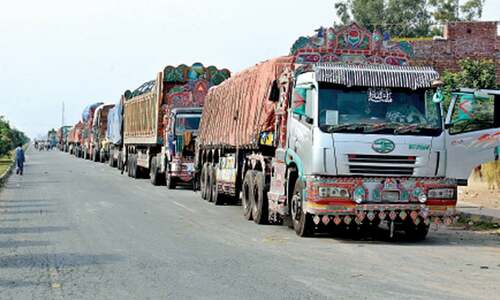
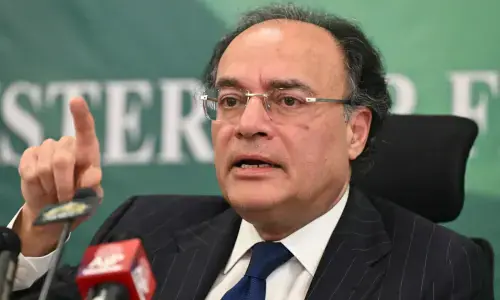
PAJCCI Chairman Zubair Motiwala told Dawn.com that the volume of Pak-Afghan trade had reduced to $1.2 billion from nearly $3bn due to several factors.
“There had been political pressures during the previous governments in Afghanistan, but now many of our problems have been resolved after the Islamic Emirate formed the government,” Alokozai said without elaborating.
He said that Afghans were interested in trade with Pakistan and through Pakistani ports.
“We expect more facilities from Pakistan than any other country. As our banking system faces international curbs, we want Pakistan to opt for an alternate system like China, Uzbekistan and Iran,” Alokozai said.
He complained of delays in clearing containers at Karachi posts which sometimes lead to demurrages on Afghan transit goods. He also voiced concerns about the problems faced by Afghans in obtaining business visas, saying that he had only been issued a six-month visa.
Qaiser told the participants of the meeting that the federal cabinet would soon decide on more incentives for Afghan traders.