1
1

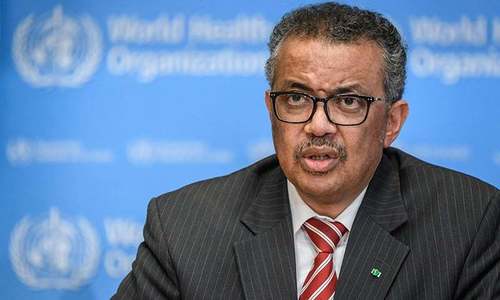
ISLAMABAD: The Supreme Court has set aside the Islamabad High Court (IHC) order that the World Health Organisation (WHO) does not enjoy immunity in a dispute over customs clearance of vehicles brought into the country for relief work in the wake of 2010 floods, with the observation that determination of scope, limits and extent of diplomatic and state immunity clauses of different statutes needs further deliberations.
In an appeal moved by WHO Islamabad through its counsel Chaudhry Mohammad Ashraf Gujjar against Mohammad Ansar Iqbal of Multi Logistics Services, Rawalpindi, the apex court in its order noted that giving a finding on the issue of state/diplomatic immunity in the present case would become an academic exercise, since the matter had been settled out of court.
However, in its order, the apex court made it clear that the IHC order pronounced on March 22, 2021 in the case would have no precedential value in terms of Article 201 (decision of high court binding on subordinate courts) of the Constitution.
Order says diplomatic, state immunity clauses of different statutes need detailed deliberations
The SC bench comprising Justice Amin-ud-Din Khan and Justice Jamal Khan observed that the counsel representing the petitioner had apprised the court at the last hearing that the respondent (Ansar Iqbal) had withdrawn his suit. But it noted that the diplomatic and state immunity clauses of different statutes needed further deliberations.
Earlier, the counsel for WHO Islamabad argued that the high court or the civil court had no jurisdiction to entertain and try the suit against the organization under the contract between the parties in the light of Clauses 16 of the General Conditions of Contract which contains amicable settlement between the parties in accordance with the practice and through conciliation in accordance with the conciliation rules of the United Nations Commission on International Trade Law (UNCITRAL) and relevant arbitration rules.
In 2011, the WHO had requested respondent Mr Iqbal of Multi Logistics Services, Rawalpindi, to carry out customs clearance for 31 ambulances and six armoured vehicles for its use in the Khyber Pakhtunkhwa relief operations following the 2010 natural disaster.
The appellant said the ambulances, especially the armoured vehicles, were procured by the WHO for emergency operations in the exclusive interest and benefit of the people of Pakistan and therefore in no way a commercial transaction. For this purpose, the organization provided all the requisite documents to the respondent on March 25, 2011 and therefore the respondent was responsible for the storage and detention costs from March 26, 2011 until the release of the ambulances from the Karachi Port on May 14, 2011, the counsel for the WHO contented. The organization duly considered all invoices and assessed that due to the ‘inefficient services’, no service was justifiable in the matter, rather the respondent was liable to the petitioner for consequential and incidental losses caused due to inordinate delay in getting the vehicles released, he argued, alleging that the respondent fraudulently altered an invoice to the payment of Rs1.44 million from the original amount of Rs344,000.
Published in Dawn, February 12th, 2022