Scholz says Germany open to boosting troops in Baltics



BERLIN: Chancellor Olaf Scholz on Sunday said Germany was prepared to send extra troops to the Baltic states, ahead of a key trip to Washington where he will seek to bolster his influence in the Ukraine crisis.
“We are... prepared to do whatever is necessary to strengthen” Germany’s presence in Nato operations in the Baltics, Scholz said in an interview with the ARD broadcaster.
Germany leads a Nato operation in Lithuania and has around 500 soldiers stationed there.
Asked whether reinforcements could be agreed at a Nato defence ministers’ meeting in mid-February, Scholz said: “We are ready to make a decision.” Defence Minister Christine Lambrecht had earlier said in an interview with the Funke media group that Germany was prepared to strengthen its presence in Lithuania.
“In principle, troops are... available for reinforcement, and we are now in talks with Lithuania about what exactly would be useful,” Lambrecht said.
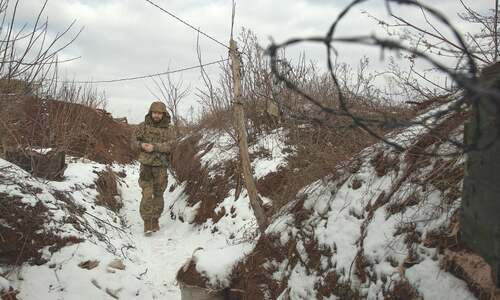
The pledge comes amid growing fears that Russia may be preparing to invade Ukraine, with the West accusing President Vladimir Putin of amassing more than 100,000 troops at the border.
Russia denies it plans to invade but has demanded wide-ranging security guarantees from the West, including that Ukraine never be allowed to join Nato.
With Scholz facing growing criticism of Germany’s apparently ambivalent stance in the crisis, he will travel to Washington for the first meeting of his chancellorship with US President Joe Biden on Monday.
He will also meet the leaders of the Baltic states in Berlin this week and will travel to Ukraine and Russia later this month.
Scholz, who in December succeeded veteran German leader Angela Merkel, on Sunday doubled down on Germany’s refusal to send weapons to Ukraine.
“For many years, the German government has had a clear course that we do not deliver to crisis zones and that we also do not deliver lethal weapons to Ukraine,” he said.
In the current crisis, this was about “preventing a war in Europe, and that is what I owe to the citizens of our country”, he said.
He also reiterated that Germany was prepared to put the brakes on the controversial Nord Stream 2 gas pipeline from Russia to Germany if Moscow does invade Ukraine.
Published in Dawn, February 7th, 2022