Reforms in civil, criminal law to bring revolution in justice system: PM Imran


 51
51


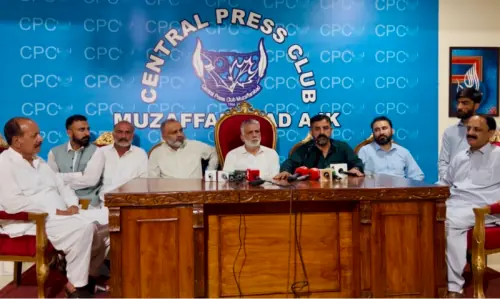
Prime Minister Imran Khan on Thursday termed effective dispensation of justice as the state's responsibility, saying the government's reforms in the civil and criminal procedure codes would ensure justice faster.
Addressing an event regarding Criminal Law and Justice Reforms in Islamabad, the prime minister said the massive amendments would help bring a revolution in the criminal justice system and simplify the procedure for the common man.
He paid tribute to Law Minister Farogh Naseem and his team for drafting the reforms, saying that it was a "defining moment" in the country's history.
The prime minister said for the first time, the government was making changes in the laws introduced during British rule to bring improvement to the way justice was dispensed.
He said no government in the past had ever thought about reforming the century-old laws in order to maintain the status quo and accommodate the elite.
The premier said the civil law reforms were a step towards ensuring rule of law in line with Riyasat-i-Madinah (state of Madinah).
Prime Minister Imran said the lack of supremacy of the law was the "biggest obstacle" preventing Pakistan from progressing. Talking about overseas Pakistanis, he said they were the country's biggest asset and their income was equal to that of 220 million Pakistanis.
Pakistan was running because of the remittances sent by overseas Pakistanis, he said. However, they did not invest in Pakistan because they did not trust Pakistan's justice system and laws related to contract enforcement, he added.
"When they start bringing investment to Pakistan, we will never have to go to anyone with hands outstretched. Why do we go to IMF (International Monetary Fund)? Because this is the biggest problem, nobody trusts our rule of law."
Referring to the Reko Diq case, in which Pakistan was ordered to pay $5.9 billion to the Tethyan Copper Company in damages, PM Imran said work in the mines would already have started if the case was filed in Pakistani courts.
"If it went through our courts, the judgement would have been announced and the mines would be running either way. But because it was international arbitration, how big a price [we had to pay?]" he asked.
Prime Minister Imran appealed to the judiciary and members of the legal fraternity to help implement the government's reforms.
Legal reforms
Speaking before the prime minister, Law Minister Barrister Farogh Naseem said the Code of Criminal Procedure needed a change and mentioned that over 700 amendments have been introduced to overhaul the existing legal system.
Explaining those amendments, he said that the formation of a statute of an independent prosecution service, forensic laboratory and prison rules were significant reforms.
He said a law had been made for mandatory dispensation of budget to police stations to meet the expenses of investigation, along with deputing a sub-inspector at each station with preferably a bachelor's degree.
He said the trial judge would be made answerable before a high court if he failed to decide a case within nine months.
The court could freeze any documents, including identity cards, bank accounts, etc of an absconder, he added.
He urged lawyers to support the reform of electronic recording of witnesses, in any language, to ensure accuracy and expedition of cases.
In cases of personal offences, including murder or rape, it would not be mandatory for the maker of the video to appear in the court as a witness, he said.
He emphasised the implementation of civil law reforms with an effective role of judiciary, benches and prosecutors and investigators.
Parliamentary Secretary for Law Maleeka Bokhari said over 700 amendments made in the criminal procedure code were a milestone of the PTI government and will ensure prompt delivery of justice.
She said for decades, powerful people took advantage of the loopholes in the law, however, the reforms will provide support to the poor seeking justice.