THERE continues to be a lack of political consensus on Sindh’s local government law, as the PPP insists on keeping the legislation as it is without listening to the opposition’s criticism.
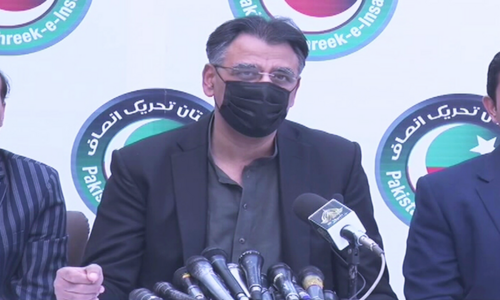
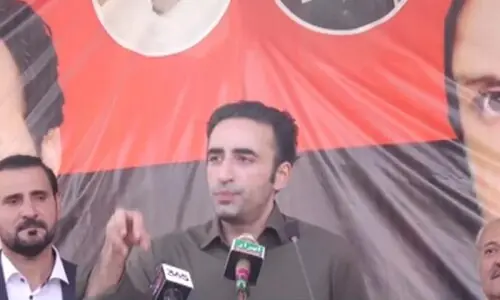
The opposition parties in Sindh, meanwhile, remain adamant that the bill is unfair and fails to address the problems the third tier faces in the province. While speaking in Karachi the other day, Federal Minister Asad Umar termed the Sindh Local Government Amendment Act, 2021, a “black law”, adding that his party would take legal action against the legislation.
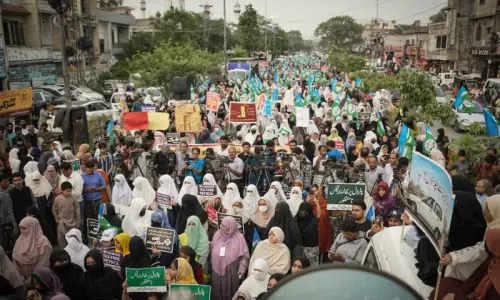
Some other parties, including the Jamaat-i-Islami and PSP, have already gone to court against the law. Meanwhile, supporters of the JI have been camping outside the Sindh Assembly building for several days in protest against the passage of the law. The PPP, on the other hand, says the law will be amended within the House, and not on the streets.
The fact is that a matter as sensitive and essential to democratic governance as the provincial local government law needs the input and consensus of the maximum number of stakeholders. Unfortunately, the PPP has failed on this count, choosing instead to bulldoze the law through the assembly last month after the Sindh governor had sent the bill back without giving assent.
Interestingly, the PPP has criticised the centre’s similar penchant for bulldozing laws and ordinances through parliament. The PPP has alternated between promising to listen to the opposition’s views and using its numbers in the Sindh Assembly to rush through legislation.
There can be little argument that the PPP’s earlier 2013 LG law, which replaced the Musharraf-era system, failed to deliver in urban Sindh. Karachi is in a shambles where civic services are concerned. Hyderabad, Larkana and Sukkur are not faring any better. Infrastructure is dilapidated, while water and sewerage services, as well as solid waste management systems, have virtually collapsed. This is largely because the 2013 law introduced a bureaucratic, top-heavy LG system in Sindh where the mayor’s office as well as the union councils had minimum powers, while the provincial government served as a glorified municipality.
This LG system has failed manifestly, therefore the PPP should not be stubborn; it should incorporate the valid suggestions of the opposition in the new law, especially as Sindh’s ruling party does not have significant representation from Karachi. All parties, led by the PPP, must go back to the drawing board and make further amendments in the LG law acceptable to the majority of stakeholders. The mayor should be empowered politically and financially, while basic civic services need to be overseen by the mayor’s office. Legal challenges to the law may result in a lengthy battle in court, so it is in the best interests of all parties to rework the law within the House and come up with progressive legislation for Sindh.
Published in Dawn, January 5th, 2022