ISLAMABAD: The investment climate in Pakistan is very pragmatic and needs various corrective measures like decreasing the government’s footprint in the economy.
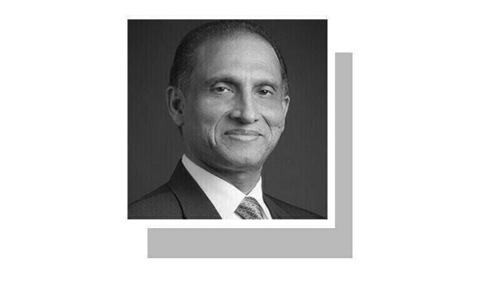
This was pointed out by economist and vice chancellor of Pakistan Institute of Development Economics (PIDE) Dr Nadeemul Haque and leading researcher Dr Durre Nayab while talking to a group of journalists and writers in Islamabad.
They said the greater the role of the government in the economy, lesser the space available for entrepreneurs to function, adding that the challenge was to significantly raise investment rate and productivity as these were major drivers of growth but were relatively low.
Referring to a detailed report titled ‘Reform Agenda for Accelerated and Sustained Growth’, they said research laid down the reform agenda, pursuit of which would put the country on a high and sustained growth trajectory.
For there to be a stable democracy, Dr Haque suggested proportional representation in the electoral system must be adopted which meant that for political parties to be eligible to contest elections, the parties must have elections within the party as well.
“A certain, minimal percentage of the provincial population must be inducted as party members. The legislators should not have any say in the approval and execution of development projects. Only a small proportion, maybe 5pc, of the legislators may hold executive positions, the rest should be legislators only, Dr Haque said, adding that there should be a maximum term limit (maybe two terms) for the prime minister and all the legislators.
“Additionally, the Public Sector Development Programme (PSDP) Funds should be decentralised and federal and provincial governments should focus only on policy formulation,” he added.
Dr Durre Nayab said cities were believed to be the engine of economic growth.
“The cities that encourage economic activity are dense, high-rise, mixed-use and inclusive. These cities provide work, home, markets, school, hospital and leisure for all close to each other.
“By clustering economic activities, these cities generate knowledge spill overs, on the one hand, and reduce transaction costs on the other. This is an environment conducive to innovation, which is crucial for economic growth,” she said.
Published in Dawn, December 27th, 2021