• Orders special arrangement for the purpose
• Asks govts to cooperate with HEC to end illegal activities
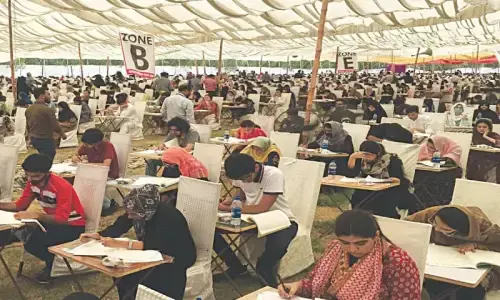
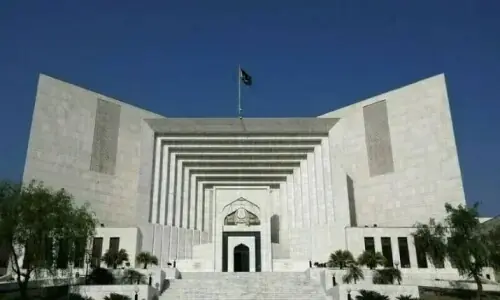
ISLAMABAD: A three-member bench of the Supreme Court on Wednesday directed the Higher Education Commission (HEC) to formulate a procedure to make a special arrangement for issuance of degrees to the students who have passed out from ‘illegal campuses’ of some private universities.
The bench comprising Justice Umar Ata Bandial, Justice Sajjad Ali Shah and Justice Syed Mansoor Ali Shah also ordered the HEC to ensure closure of the illegal campuses and uniform implementation of its policies across the country.
The apex court was hearing the matter pertaining to non-issuance of degrees to the students who passed out from illegal campuses of the private universities.
Preston University and Al Khair University allegedly ran ‘illegal’ campuses in Karachi and Lahore. In their petition, students of these campuses urged the court to direct the HEC to issue degrees to them.
During the course of proceedings, the bench ordered the HEC to formulate a procedure and through some special arrangement issue degrees to the students who had passed out from the ‘illegal’ campuses.
Justice Bandial, however, said uniform implementation of the HEC’s policies should be ensured across the country. He said no compromise could be made on the provision of higher education to the youth.
The SC directed the federal and provincial governments to fully cooperate with the HEC to maintain uniform standard.
The bench observed that the basic issue to ponder over was whether private universities could set up sub-campuses outside their territorial limits, while the HEC had already declared they could not do so before issuing many alerts in this regard.
The court noted that the HEC believed cooperation from the federal and provincial governments was essential to end such illegal activities, but the Centre and provincial governments had not cooperated with the commission.
When Advocate Ali Zafar, counsel for the students, said that the court had ordered the National Accountability Bureau (NAB) to pursue action against such private varsities, Justice Bandial said the HEC had the powers, therefore, there was no need for the accountability bureau to investigate the matter.
If the HEC was a weak institution, the federal government could be ordered to amend the relevant laws, Justice Bandial remarked.
Advocate Zafar said the students had approached the Lahore High Court (LHC) for their degrees and the LHC had declared the sub-campuses of private universities ‘illegal’.
Justice Bandial observed that the LHC verdict was based on facts. He then directed the HEC to ensure implementation of its policies.
In its order, the apex court noted that the HEC in its stance sought assistance from the authorities concerned to stop the illegal activities of the varsities, but the Centre and provincial governments had not helped the commission.
Published in Dawn, December 16th, 2021