New Delhi shuts schools as Indian government considers 'pollution lockdown'


 6
6


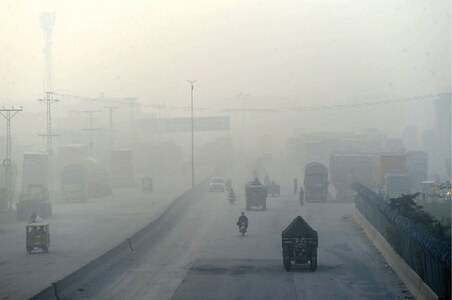
New Delhi authorities announced on Saturday a one-week closure of schools and said they would consider a “pollution lockdown” to protect citizens from toxic smog.
“Schools will be shut so that children don't have to breathe polluted air,” Delhi's chief minister, Arvind Kejriwal, told reporters.
Delhi is ranked one of the world's most polluted cities, with a hazardous melange of factory and vehicle emissions, and smoke from agricultural fires, settling in the skies over its 20 million people each winter.
On Saturday, the Supreme Court suggested imposing a lockdown on Delhi to combat the air quality crisis.
“How will we live otherwise?” Chief Justice NV Ramana said.
Kejriwal said his government would consider the court's suggestion after consulting with stakeholders.
Read: Diwali leaves Delhi wheezing in dangerously unhealthy air
“Pollution lockdown has never happened before. It will be an extreme step,” he said.
Kejriwal said that construction activity would be halted for four days to cut down dust from vast, open sites.
Government offices were asked to operate from home and private businesses advised to stick to work-from-home options as much as possible.
The Central Pollution Control Board on Friday advised authorities to prepare “for implementation of measures under 'emergency' category”.
It added the poor air quality would likely run until at least November 18 due to “low winds with calm conditions during the night”.
On Saturday, levels of particulate matter were 2.5 — the smallest and most harmful, which can enter the bloodstream — topped 300 on the air quality index.
That is 20 times the maximum daily limit recommended by the World Health Organisation.
Hospitals were reporting a sharp rise in patients complaining of breathing difficulties, the Times of India reported.
“We are getting 12-14 patients daily in the emergency, mostly at night, when the symptoms cause disturbed sleep and panic,” Dr Suranjit Chatterjee from Apollo Hospitals told the paper.
Stubble smog
Delhi's government has been vowing for years to clean up the city's air.
The burning of agricultural waste in Delhi's neighbouring states — a major contributor to the city's pollution levels every winter — has continued despite a Supreme Court ban.
Tens of thousands of farmers around the capital burn their stubble — or crop residue — at the start of every winter, clearing fields from recently harvested paddies to make way for wheat.
Read: Delhi air crisis worsens as Indian farmers step up stubble fires
The number of farm fires this season has been the highest in the past four years, according to government data.
Earlier this year, the Delhi government opened its first “smog tower” containing 40 giant fans that pump 1,000 cubic metres of air per second through filters.
The $2 million installation halves the amount of harmful particulates in the air but only within a radius of one square kilometre, according to engineers.
A 2020 report by Swiss organisation IQAir found that 22 of the world's 30 most polluted cities were in India, with Delhi ranked the most polluted capital globally.
The same year, the Lancet said 1.67 million deaths were attributable to air pollution in India in 2019, including almost 17,500 in the capital.
In recent days, the river flowing through Delhi, the Yamuna, was also choked with sickly white foam.
The city government has blamed the blight on “heavy sewage and industrial waste” discharged into the river from further upstream.