World Bank ponders relocation of Karachi Port

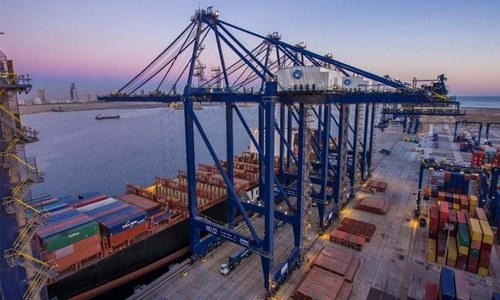
ISLAMABAD: The World Bank has in a new study explored the cost, process and impact on a potential relocation of Karachi Port.
The global lender in the report assessed alternative ways of bridging the gap between demand and improvement of capacity and access to Karachi Port and Port Qasim.
The report — Karachi Ports Supply and Demand Assessment — explored alternatives for a national port strategy: to develop both Karachi and Qasim ports simultaneously; focus on one at a time; or develop a third new port sometime in the mid-2030s when Port Qasim would be at its maximum capacity.
Comparative costs of alternative development discount simultaneous development of both Karachi and Port Qasim. Development of either port one at a time could possibly provide navigation, berth, and land access capacity at relatively high cost. Developing Karachi Port elevated expressway would not resolve the channel depth issue at Port Qasim.
The assessment shows that the Karachi Port efficiency and capacity can be increased if elevated expressway project would serve South Asia Pakistan Terminals (SAPT), oil installations, East and West Wharves relieving traffic at Keamari and Dock yard Road; renovate rail lines at SAPT, and dispatch regular trains every day; and develop Pipri rail corridor.
The second option, developing PQA only, with an improved maritime access via 2 channels, would involve a cost of $550 million, but this action alone will not resolve Karachi’s traffic snarls, assessment shows.
The third option of simultaneous development at both KP and PQ at a total a cost of $850 million, would effectively remove the main obstacles. The fourth option was that of a third new port. Two possible locations have already been considered, Somiani, 85km to the north of Karachi, and Keti Bunder, 150km to south of Karachi.
Neither has rail access and both require long and high maintenance access roads that would, furthermore, not relieve Karachi’s traffic congestion. Thus, previous feasibility reports concluded that no location fitted the criteria for a deep-water port within 150kms of Karachi.
The other option is Gwadar. But Gwadar has failed to attract traffic from Karachi Port or Port Qasim over the past 15 years since its inauguration. Gwadar has been leased to China for 43 years, until 2059. The only container service, running at Gwadar, is by COSCO, with limited cargo.
However, until its road and rail links to centres of economic activity are fully operationalised and it is opened to competitive container companies it will remain under-utilised. With this background, the proposed combined two investments of $850 million in Karachi’s existing ports should be able to handle the forecasted traffic until 2040.
The report concludes that no site for a third port is yet available, but it is proposed that the search for a site should continue in case it is required in the long term.
Published in Dawn, November 5th, 2021