0
0

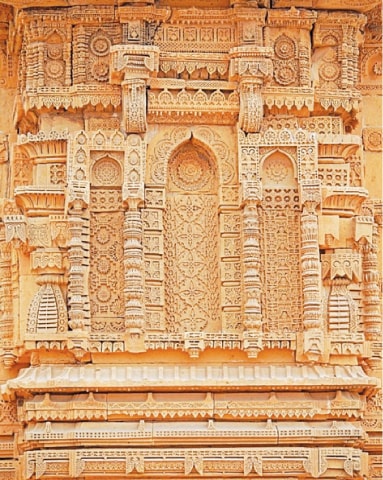
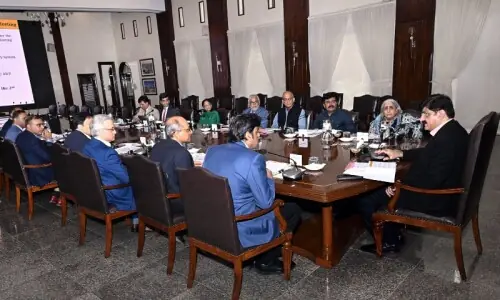
THATTA: Ways to ensure conservation and preservation of centuries-old architecture at the Makli necropolis were discussed at a gathering of archaeology experts and officials of the department of culture, tourism and antiquities, which had organised the event. A 40-day ‘Monuments Conservation and Management Training Programme’ was also launched.
Director general of antiquities Manzoor Kanasro said that foreign experts would share their skills and experience with the trainee archaeologists. He said that the Sindh government was doing its best to preserve historical and heritage sites in the province and would continue to extend its full cooperation to all those working for the cause.
Senior archaeologist Kaleem Ullah Lashari, Secretary Culture Raheem A. Soomro, Dr Tahir Saeed, Sarfaraz Jatoi and others discussed their proposals with participants regarding proper preservation and conservation of the heritage site and promotion of heritage tourism in Sindh. They also exchanged views on the damage already caused to various monuments at the necropolis.
Dr Lashari said that the Makli heritage site was mainly victim of ravages of weather, which had damaged many monuments partially and some others completely over the last few decades. He noted that the department had been taking appropriate measures in this regard and succeeded in preventing people from causing damage to them.
The World Heritage Committee of the United Nations Educational, Scientific and Cultural Organisation (Unesco) which had been monitoring the progress has expressed its satisfaction over the measures taken by the department, according to him.
Regarding preservation and careful handling of work, Dr Lashari said that the necropolis was in fact a museum of amazing calligraphy and architectural works visible on gravestones, walls of graves and tombs as well other structures standing at the site.
He pointed out that such calligraphy comprised Quranic verses, sayings of the Holy Prophet (PBUH), elegies etc. The inscriptions, both written and engraved, were in Arabic and Persian, he said. Most stones, intact or fallen, were affected by temperatures, humidity, rainwater, salinity and saltish air, he pointed out.
He stressed the need for conserving all these carved stones, as well as the architectural pieces of historic importance, by employing experts of archaeology and highly skilled workforce.
He highlighted the importance of graves at Makli necropolis representing epigraphy of six centuries, and said this appeared to be the largest period covered in the historic cities of the country.
Dr Tahir Saeed said the department was coordinating with international heritage experts to conserve the monuments. He stressed that ethical guidelines must be strictly followed by those taking up conservation projects for any cultural heritage site. He said conservation work should be based on evidence and not conjecture and intervention should be minimal. The methods employed should be reversible and documented before, during and after each work, he added.
Published in Dawn, November 3rd, 2021