Pakistan needs long-term reform for reviving exports: World Bank


ISLAMABAD: The World Bank has suggested that Pakistan needs an integrated and long-term reform strategy for fixing the export challenge that will require coordination across government agencies at federal and provincial levels to harmonise policy decisions, institutional strengthening to ensure effective implementation and active public-private sector dialogue to secure the broadest support to reforms.
The ‘Pakistan Development Update: Reviving Exports’ report released by the World Bank on Thursday says that due to strengthened domestic demand, imports have grown much higher than exports in recent months, leading to a large trade deficit. To sustain strong economic growth, Pakistan needs to increase private investment and export more, suggests the report.
In examining the country’s persistent trade imbalance, it identifies key factors that are hindering exports: high effective import tariff rates, limited availability of long-term financing for firms to expand export capacity, inadequate provision of market intelligence services for exporters, and low productivity of Pakistani firms.
Over the last two decades, share of exports in GDP has declined from 16pc to 10pc
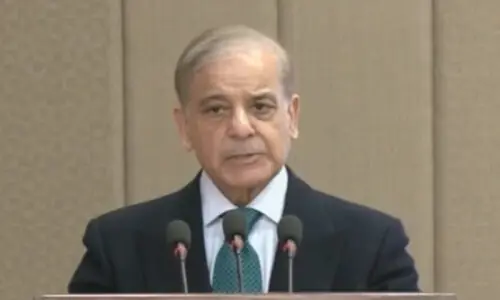
“The long-term decline in exports as a share of GDP has implications for the country’s foreign exchange, jobs, and productivity growth. Therefore, confronting core challenges that are necessary for Pakistan to compete in global markets is an imperative for sustainable growth,” said Derek Chen, Senior Economist, World Bank.
“Since longstanding issues with the persistent trade gap have resurfaced, this edition of the report provides a timely, in-depth assessment and policy recommendations that can help spur exports,” he said.
According to the report, debates on appropriate policies to reduce the trade deficit have resurfaced with the recent increases in the trade gap. A key factor driving the trade imbalance is the declining export competitiveness. Indeed, the share of exports in GDP has been declining since the turn of the century, from 16 per cent in 1999 to 10pc in 2020.
This falling export share has implications for foreign exchange, jobs, and productivity growth. At the firm-level, the decline is consistent with low entry rates into exporting, and exporters that struggle to expand over their life cycle. At the economy level, the lack of a sustained robust growth in exports has resulted in little diversification or sophistication gains for the export bundle, the report says.
While the causes of the falling export share are manifold, there are three key ones. First, the high effective import tariff rates and limited export market access tend to discourage exports. Second, the supporting services for exporters are inadequate, especially those for long-term financing of capacity expansions and market intelligence services to secure new export contracts. Third, the low productivity of Pakistani firms hinders them from successfully competing in global markets.
Published in Dawn, October 29th, 2021