Cotton surges to Rs14,500 per maund


 1
1


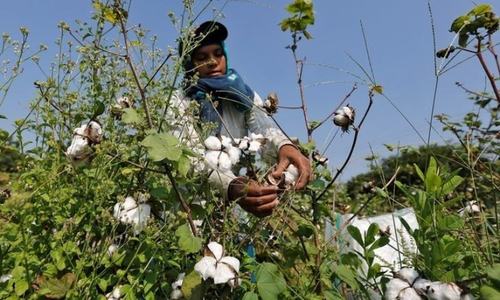
LAHORE: A bullish trend again gripped the cotton market on Tuesday as white lint rate hit Rs14,500 per maund for the third time during the current season.
Brokers say the main reason behind the hike in local white lint rate is reports that cotton futures in the New York market are trading at their highest price in a decade.
Naseem Usman, Karachi Cotton Brokers Forum chief, says that New York cotton futures traded at $1.07 on Monday, sending a panic wave among the textile industry relying heavily on imported lint after failure of the local crop year after year.
He says that local cotton rates are likely to go further up in line with the surge in New York future prices amid heavy buying by China. Pakistan imports cotton from the US, Brazil, Argentina, Australia, South Africa and Central Asian States to meet requirements of its textile industry.
Mr Usman says increasing disparity among dollar and rupee, recent spell of rains in Punjab’s cotton belt, reports of white-fly, mealybug and pink bollworm attacks as well as unavailability of latest reliable data about the crop size are adding to the worries of the local buyers.
Punjab produces 80 per cent of cotton in the country. It had fallen short of the crop sowing target as only 3.1 million acres against the target of 4.0 million acres could be sown for the 2021-22 season. National rough estimates put cotton production between 7.5 and 8.5 million bales against the official estimates of 10.5 million bales. The country will need to import around 5.0 million bales to meet demand of the local textile industry.
Ijaz Ahmed Rao, a cotton grower from Lodhran, says those who have sown the crop early in the season are harvesting 40 to 50 maunds per acre, while the average yield of other growers has been estimated at 25 to 30 maunds.
Responding to a query, he says that pink bollworm and climatic conditions have hit the lint production. “In the desert area, the crop apparently looks healthy with a good number and size of balls. But, when one opens a ball, it’s found to be pink.”
In some areas, he says, a fungus has hit the plants making them look burnt out. Seemingly the difference in atmospheric and soil temperatures has damaged the crop, he adds.
Published in Dawn, October 6th, 2021