PESHAWAR: Rivalry among the world’s great powers has been driving the international relations in the current world order and will determine the significance of Afghanistan and the region, said a US professor.
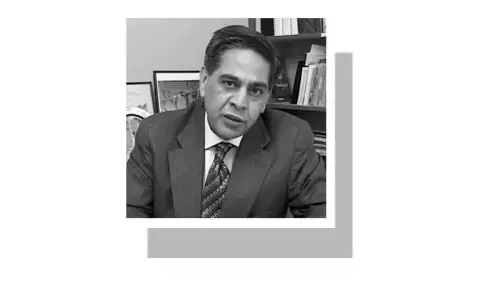
Dr Karl Kaltenthaler, director at the Center for Intelligence and Security Studies, Professor of Political Science and International Relations at the University Akron, Ohio was speaking on the subject of The Taliban’s Return to Power: The Stakes for the US.
International Relations Students Association, University of Peshawar had arranged the webinar which was attended by faculty members and students from different departments, said a statement issued here on Wednesday.
The event pivoted around an analysis of the evolution of the Taliban regime in Afghanistan and the question of whether the country would score recognition from the United States under its new “autocratic regime.”
Highlights US stakes after Taliban’s return to power
Dr Karl Kaltenthaler scaled the factors affecting US decision to not recognize the Taliban regime at present and in the foreseeable future as the entanglement of Taliban and Al Qaeda, the presence of designated terrorists among government ranks of the Taliban, the fallacy of the Taliban 2.0, and the public opinion in the US.
“The significance of said recognition lies in the flow of aid complexes from the US to the Afghan people which have to go through the Taliban to get to them,” the statement quoted Dr Kaltenthaler as saying.
He emphasized the shift in US foreign policy priority list from Afghanistan to the Great Power competition among the US, China, and resurgent Russia.
“Any significance lent to this region and Afghanistan in particular would be at the behest of the Great Power competition driving international relations in the current world order,” he said.
One dilemma present in the US dealing with the Afghanistan contention was posited by Dr Kaltenthaler as, “the Biden Administration wants to keep Afghanistan down the list until it is on fire again. The intelligence community suggests that you don’t want to wait that long”.
In his opening remarks, Dr Syed Hussain Shaheed Soherwordi, chairman of the Department of International Relations, endorsed the arguments of Dr Kaltenthaler.
He, however, said that there was a dichotomy in the US dealing with the Modi government and that of Taliban in the claim that there were designated terrorists among the ranks of the latter.
“Such a designation seems to be in flux with the changing strategic interests of the US and the world at large. As Indian Prime Minister Modi was held accountable for committing genocide yet has been entertained in a red-carpet welcome by the Biden Administration due to changing strategic interests and power dynamics,” he remarked.
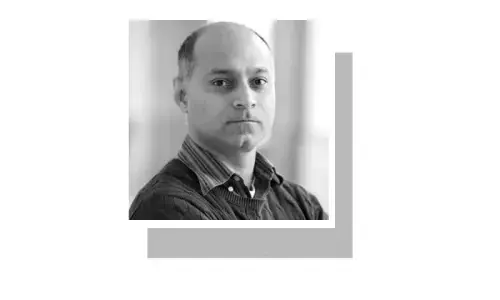
Another guest speaker Dr Stuart J. Kaufman, Professor Department of Political Science and International Relations, University of Delaware, Newark iterated the US mistakes in Afghanistan in the post 9/11 scenario in comparison with the contemporaneous state of affairs.
Recounting the events from 2002, he enlisted some mistakes as, lack of a peace agreement with Taliban in 2002, misguided aid, and poor targeting strategies killing civilians.
Published in Dawn, September 30th, 2021