Punjab plans to set up Strategic Planning Unit to revise Pindi’s master plan


 0
0


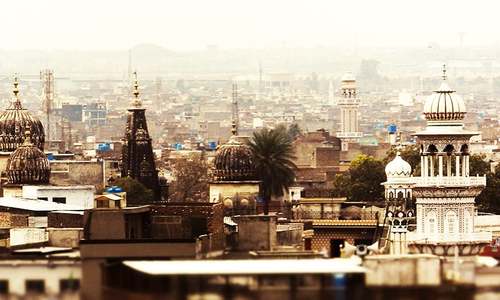
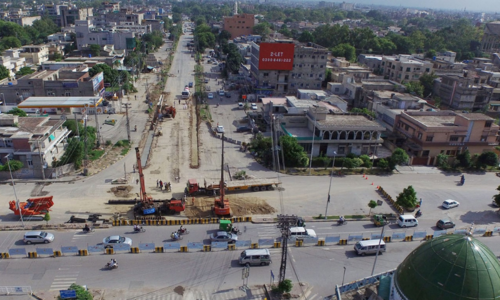
RAWALPINDI: Realising the need to revise Rawalpindi’s master plan, the Punjab government is planning to set up the Strategic Planning Unit at the commissioner’s office.
Though, the Rawalpindi Development Authority (RDA) had commenced work on revising the master plan, it failed to proceed with it due to lack of capacity.
Rawalpindi’s first master plan was outlined in 1968 when the city was made an interim federal capital. However, once the government offices were shifted to Islamabad, the plan was not enforced. Nearly 30 years later, another master plan was prepared by a board of officials for the period 1996 to 2016.
However, when the Capital Development Authority (CDA) started work on revising its master plan, the Punjab government also felt the need to do the same with the garrison city’s master plan as both cities were interlinked and their administrations had disputes over boundaries.
Urban sprawling turned villages into cities, causing environmental issues, commissioner says
A senior official of the Rawalpindi district administration told Dawn that green areas had shrunk due to mushroom growth of housing societies.
“Interestingly, Rawalpindi city lost its green areas in the last 20 years; there is no farm around the city as development projects were squeezing agricultural lands,” the official said.
He said under the law, a greenbelt had to be established around the city to make it pollution free but legal and illegal housing societies grabbed agricultural lands, adding that the RDA failed to keep an eye on the housing societies.
The official said the residential, commercial and industrial areas need to be streamlined as do the green areas.
According to the official, there are a number of planning agencies as far as the city’s growth and building control are concerned, including the RDA, cantonment boards, the Rawalpindi Municipal Corporation, the district administration and the housing and planning departments.
“These agencies have their own by-laws, work independently and without any centralised coordination or even direction,” he added.
On the other hand, Rawalpindi CommissionerGulzar Hussain Shah said in line with the vision of Prime Minister Imran Khan, protection of agricultural land and lush plots had been ensured under the Punjab Land Rules 2020.
He said work on Rawalpindi’s master plan would be carried out on priority basis for which a Strategic Planning Unit would be set up in the commissioner’s office.
This unit will review the implementation of federal and provincial laws in mega projects in Rawalpindi, he added.
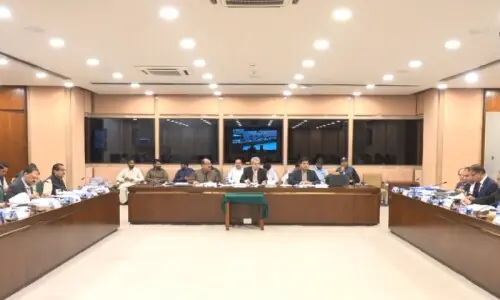
Meanwhile, the commissioner also held a meeting to review work on the master plan and urban development under Punjab Land Rules 2020. The meeting was attended by all deputy commissioners of Rawalpindi Division and other officials concerned.
Commissioner Gulzar Hussain Shah said due to urban sprawling, “our villages have also turned into cities which is causing many environmental problems”, adding that long-term and short-term planning was being done under the government’s policy to stop this process.
He said the process of construction of houses on agricultural lands would be discouraged under the law and vertical constructions would be promoted in the city limits and for this, the traffic, sewerage and water supply systems in the city would be developed in a modern way.
He said regular analysis of population growth in Rawalpindi during the last eight years should be done which would be helpful for future urban development strategy.
The commissioner said the site development zones of Rawalpindi tehsil would be created and regular urban development planning would be done by demarcating urban boundaries.
He said close cooperation between Rawalpindi Metropolitan Corporation, Rawalpindi Development Authority, Local Government and Community Development and Rawalpindi and Chaklala cantonment boards was very much needed in the process of urban development of Rawalpindi.
Published in Dawn, September 9th, 2021