0
0

ISLAMABAD: Federal Minister for Science and Technology Shibli Faraz said here on Thursday the country was heading towards water scarcity and about 27,000 children dying annually due to water-borne diseases was a sign of this alarming situation.
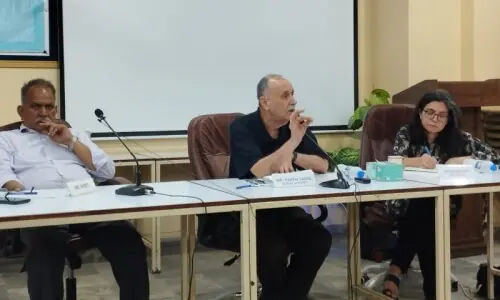
Speaking at the Pakistan Water Conference on Emerging Water Challenges at the Pakistan Council for Research in Water Resources (PCRWR), he said that Pakistan was blessed with diverse landscape and seasons.
Mr Faraz pointed out that the Himalayan glaciers in the north were the largest frozen water reserves outside the polar region. The fertile alluvial plains of Punjab and Sindh provinces are irrigated by one of the largest contiguous irrigation systems of the world, he said.
“This system had contributed into the development of the 4th largest groundwater aquifer in the world – after China, India and US. Despite these natural resources, Pakistan is facing serious water issues and governance challenges, he said.
The minister said the climate change phenomenon had put Pakistan among the most vulnerable countries. He said that access to sufficient freshwater had been categorised as the base of socioeconomic development of a country.
“Its importance further signifies for the countries like Pakistan having agriculture-based economies,” he said.
It was stated that presently the pressing challenge was unavailability of an integrated water resources data warehouse and open data sharing policy. This limitation has multiplied water resources management and governance challenges.
There are numerous organisations working in various areas of water resources’ management, including national and international research institutes, federal and provincial government organisations, international development partners, etc.
He said that even then, policies and practices in water management sector were uninformed by contemporary knowledge. Consequently, new issues related to water resources also emerged, the minister said, adding it was crucial that the development investments and policies needed to be informed by research to address these complex issues.
“We have taken up one-point agenda for water resources ‘translate research into public benefit’, with the help of scientific data and smart technologies,” the minister said and added the PCRWR had been tasked to bring its research into action in Islamabad as a pilot.
He told the participants that PCRWR and the Capital Development Authority had also signed a programme of cooperation for artificial groundwater recharge and development of an evidence-based groundwater regulatory framework for Islamabad.
Mr Faraz, on behalf of his ministry, assured full cooperation to all the national and international organisations in resolving water-related issues in the country.
Published in Dawn, July 16th, 2021