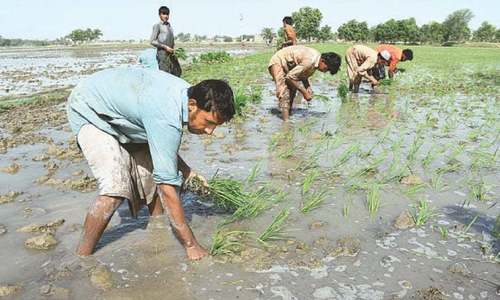
LAHORE: As the delayed monsoon is set to begin in the country early next week, the planners and growers believe it will have a positive impact on the crops, especially if it follows the pattern predicted by meteorological officials.
The Met officials had earlier forecast the start of monsoon by the end of June, which has been delayed by two weeks because of meteorological factors. The cycle has started in India and would enter Pakistan by Tuesday, generating normal rains.
However, according to weather experts, the cloud cover would only persist in the upper parts of the country, spread over Azad Jammu and Kashmir as well as central and northern parts of Punjab.
“Its impact will be largely restricted to Faisalabad and above, sparing parts of central and southern Punjab. In agricultural terms, the rice and cane belt will receive the main impact,” says an official of the agriculture department. Since both of them are water-loving crops, they may not suffer any negative impact in this cycle at least.
“The major worry during monsoon is always the cotton crop and, luckily, the initial pattern seems to have spared the cotton belt”, mainly lower central and southern parts of the Punjab. However, come August and challenges to the cotton crop will crop up. During the month, monsoon rains will be coupled with increased water in canals and streams “raising humidity levels and providing pest, especially sucking ones, an ideal situation to flourish. Another problem the farmers are now facing in regions such as Multan and other central and southern districts is changing cropping pattern. Cotton is replaced by corn and rice in these areas. Both are highly water-dependent crops and are watered regularly, giving way to humidity and increasing problems for cotton still sown among corn and rice acres,” explains Ashiq Dewan of Pakpattan district.
Cotton seems to be safe for now, but the long-term weather pattern does include cotton areas of the south in the monsoon cycle that could pose challenges.
“It should have a very good impact on the rice belt as the area is now facing massive water shortage,” says Raja Basharatullah, a farmer from Gujranwala area.
Because of low level of Mangla Dam, and official scramble to fill it to the maximum level for ensuring Rabi supplies, the Indus River System Authority is minimising releases from the dam. Since the entire rice belt depends on the Mangla Lake and River Chenab, both of which are running below normal levels, any addition of water would be welcome for farmers. Although it is not predicted to rain heavily, it would still supplement the supplies and should be a welcome event, with farmers praying for a heavier next cycle, Basharatullah says.
“Dotted by sugarcanes, albeit very limited but still not totally negligible, the week-long spell is a welcome development for the area,” cane farmer, Muhammad Bashir, says. Since the cane area has gone up by 12 per cent in the province, it must have increased in central Punjab as well and so has the need for water.
Published in Dawn, July 8th, 2021