UAE criticises oil production deal as unjust


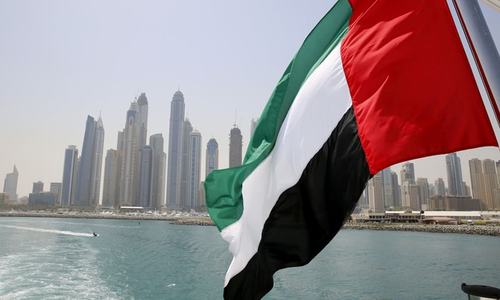
DUBAI: The United Arab Emirates on Sunday criticised the current oil output deal among Opec+ alliance members as unjust, escalating a row that could derail the energy market’s post-pandemic recovery.
The UAE’s push to increase its production baseline is reported to have derailed last week’s meeting of the alliance of oil-producing countries, and also sets it against its ally, Saudi Arabia.
“The UAE demands to have justice in the new agreement after April, and it is our sovereign right to demand reciprocity with the rest of the countries,” Energy Minister Suhail Mohamed Al Mazrouei said in a television interview.
“It is unreasonable to accept further injustice and sacrifice — we have been patient,” he said in an interview with Sky News Arabia, in unusually frank comments from an official in the UAE, which typically handles disputes discreetly.
While OPEC+ leaders Saudi Arabia and Russia support extending the deal, as it is, until December next year, the UAE wants to lock in an increase in production before agreeing to an extension beyond April when the current agreement expires.
Videoconference talks were held on Friday between the 13 members of Opec proper, led by Saudi Arabia, followed by a technical meeting and discussions between the 23 members of Opec+.
The wider grouping includes Russia, the world’s second-largest oil producer.
The hitch in discussions came “due to the UAE raising a last-minute objection to the Russian-Saudi Arabia deal reached earlier”, according to analysts from Deutsche Bank.
“The UAE, which has raised its production capacity since 2018 when the individual baselines were set, insisted on having its baseline lifted by 0.6 million barrels per day (bpd) to 3.8 million bpd, thereby allowing them a unilateral production increase within the current quota framework,” according to Ole Hansen from Saxobank.
Published in Dawn, July 5th, 2021