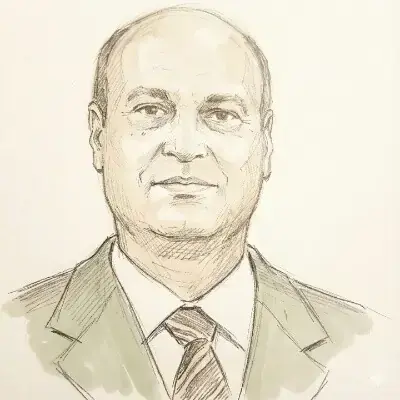
'Out of the question' Thai nationals contracted Indian variant from Pakistan: Asad Umar


Head of the National Command and Operation Centre (NCOC) and federal Minister for Planning and Development Asad Umar on Monday stressed that it was "out of the question" that two Thai nationals had contracted the Indian coronavirus variant from Pakistan as it was not present in the country.
Earlier today, health authorities in Thailand said they have confirmed the country's first cases of the Indian variant of Covid-19, in a Thai woman and her four-year-old son who have been in state quarantine since arriving from Pakistan.
Talking to Dawn, Umar said in Pakistan, some of the variants such as UK, Brazilian and South African were reported but not a single case of Indian variant has been reported yet.
He said it was quite possible that the woman had contracted the virus from Thailand or somewhere else as the virus was not reported in Pakistan.
Thailand's finding of the new variant came as the country battles a new wave of the coronavirus that began at the beginning of April, originating in upmarket entertainment venues in Bangkok and spawning clusters in several crowded slum communities. Many of the recent cases involve the British variant of the virus, which is more infectious than the original form found last year.
Thailand banned travellers from India, other than Thai citizens, starting on May 1 in response to a massive outbreak of Covid-19 cases in the South Asian nation that began in early April. India has reported more than 22.6 million infections, second only to the United States, and more than 246,000 deaths. Both figures are widely believed to be undercounted.
Thailand extended the entry ban to foreigners visiting from Pakistan, Bangladesh and Nepal on Monday in an effort to keep the Indian variant from spreading, Thai Foreign Ministry spokesperson Tanee Sangrat said.
Explainer: What we know about the Indian variant as coronavirus sweeps South Asia
Apisamai Srirangsan, a deputy spokesperson for the government's Centre for Covid-19 Situation Administration, said separately that Thai authorities are also worried about people who cross into Thailand illegally, mostly from neighbouring Cambodia and Myanmar.
Apisamai said the Indian variant was found in a pregnant 42-year-old woman who arrived on April 24 with three sons. She and her four-year-old were staying in the same room under state quarantine. The two other sons, ages six and eight, stayed in another room and tested negative.
Thailand on Monday announced 1,630 new cases, bringing its confirmed total to 85,005 since the pandemic began. There were 22 new deaths, for a total of 421.
About one-third of the reported cases in the latest wave were found in Bangkok, where daily increases have declined to 565 on Monday from 980 on Sunday and a record 1,112 on Saturday.
New clusters continue to be discovered in Bangkok, not only in crowded communities but also at markets and department stores.
Other clusters have been found among migrant workers at factories in two provinces near Bangkok.
In the eastern province of Chanthaburi, a gem mining centre, nearly 100 cases were found among African gem traders, the newspaper Thai Rath reported, citing the provincial health office. The governor this past weekend ordered the closure of gem and amulets markets, it said.